If your lot sits against the east hills, a retaining wall may be the single most useful thing you can build. A retaining wall buys you a flat area for a patio, keeps soil from creeping toward the house, and gives you a place to put plants instead of an eroding bank. The catch is that walls fail when the water behind them has nowhere to go.
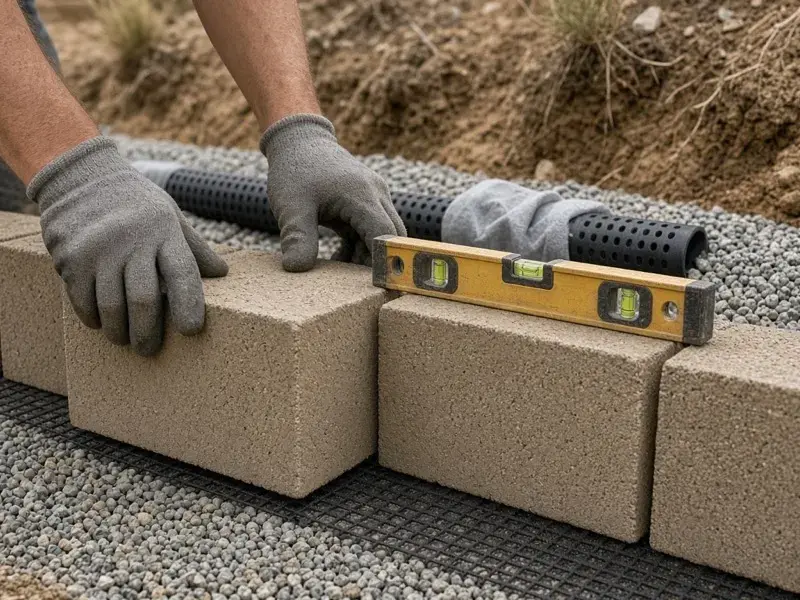
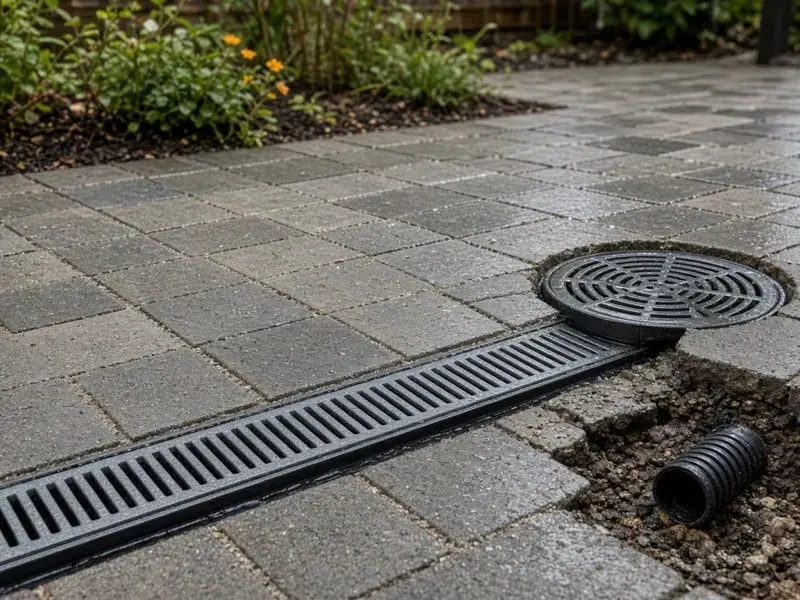
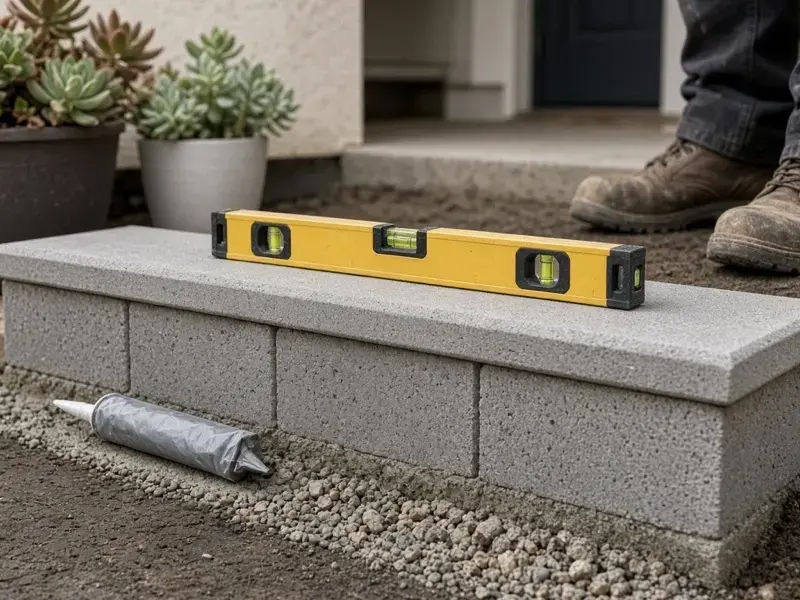
That's why we build with a compacted gravel leveling pad, interlocking block that follows NCMA segmental wall practice, clean drain rock behind the wall, and a perforated drain pipe leading to daylight or a safe outlet. Taller walls typically need geogrid reinforcement that extends back into compacted fill. Height limits and permit triggers vary, and a wall holding up a slope or supporting a structure may need engineering, so check with the city before you plan the design.
On clay, the backfill matters too. Using native clay behind a wall can load it with swelling soil and trapped water, so we typically bring in free-draining material for the zone right behind the blocks.