The deck is too hot to walk on
Dark or smooth concrete and some darker pavers can get uncomfortably hot in direct sun. Lighter, cooler surfaces make a real difference for bare feet.
Hardscaping Services
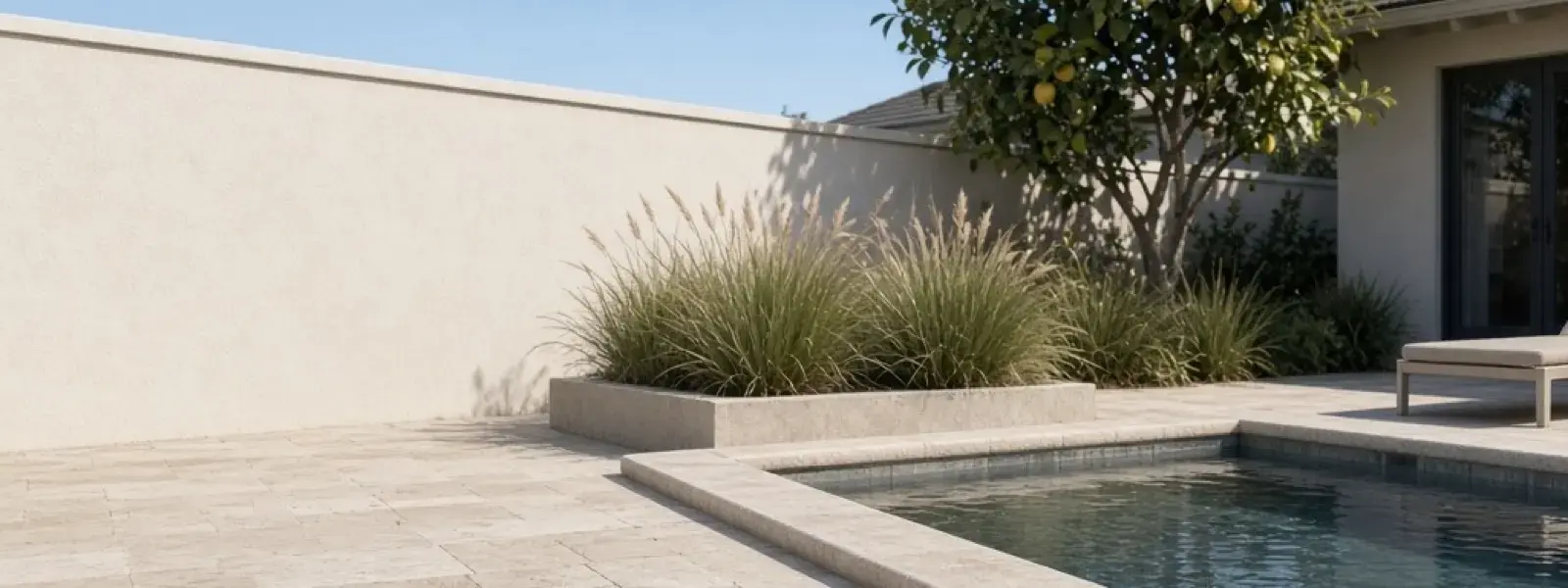
Cool, slip-resistant decks with coping, expansion joints and drainage that moves water away from the pool.
The short answer
A pool deck takes more abuse than a patio. It sees wet feet, pool chemicals, hot afternoon sun and water that must drain away from the shell. We pick the paver for temperature and traction, slope the deck about 1/4 inch per foot away from the pool, detail the coping and expansion joint, and protect the shell and plumbing during the work.
San Jose Hardscapes builds pool decks around existing pools and alongside new ones across San Jose and the Santa Clara Valley. A deck looks like a flat surface of pretty stone. In reality it's a drainage system, a traction surface, a movement joint and a heat management problem all at once, and getting any one of those wrong is what people end up complaining about two summers later.
The usual story is a pool that's ten to forty years old, surrounded by cracked, stained or slippery concrete that's too hot to stand on in July. Sometimes it's a deck that tilts toward the pool and sends water, dirt and leaves right into the skimmer. People call us when the surface has become either uncomfortable or unsafe, and often both.
We start with what's already there: the shell, the plumbing, the slab and the grade. Then we choose a paver and a method that suit the pool, the sun exposure and the way you use it. If drainage is part of the problem, we'll build it in or tie it to a proper French drain so water leaves the area instead of pooling beside the pool.
Why people call
Dark or smooth concrete and some darker pavers can get uncomfortably hot in direct sun. Lighter, cooler surfaces make a real difference for bare feet.
Algae film, sealers and smooth finishes lose traction when wet. A textured surface with the right slip resistance is a safety upgrade, especially with kids and older family members around.
Soil movement beside the shell and a thin or failed base can lift one section and drop another. Those trip hazards usually point to a drainage or base problem, not just a surface one.
If rain and hose water head for the skimmer, you carry mud and debris into the pool every time. Regrading the deck fixes the cause rather than the symptom.
New coping, tile or plaster is the right moment for a new deck. It saves tearing out finished work later and lets us match the deck and coping from the start.
What's in the job
We remove the old deck carefully, because the coping, the shell, the plumbing and the electrical bonding are all within a few inches. Utility locates and hand digging near the pool replace excavators.
Depending on the system, we build a compacted aggregate base for sand-set pavers, or we prepare a sound concrete slab for mortar-set stone. Either way, slope and drainage are set before any stone goes down.
Travertine, concrete pavers, porcelain pavers and natural stone behave differently in sun, wet and salt. We lay out the pattern so cuts at the coping are clean and the joints land where you want them.
We set or replace the coping in the style you choose, then leave a movement joint between the coping and the deck and fill it with a flexible sealant, so the two can move without cracking.
That means a deck slope of about 1/4 inch per foot away from the pool, plus channel drains where water collects, such as at a house wall or the low end of the deck.
Stone and pavers get a sealer suited to the material and the pool's water chemistry, applied after joints are filled and cleaned. We tell you how often to reseal and what cleaners to avoid.
The build
We measure the deck, find the high and low points, and check how water moves. Utilities are located before any digging, and we mark where the pool plumbing, equipment lines and bonding wire run.
Deck work near a pool may need a permit, and changes to fencing or gates can bring pool-barrier rules into the conversation. Check with your city early, and with your HOA if you have one.
We cut and lift the old deck in sections, hand-dig near the shell, and protect the coping and plumbing from damage. Any exposed plumbing is inspected and pressure-checked by the pool trade before we cover it.
For sand-set pavers we compact a crushed aggregate base in lifts, then screed a bedding sand layer. For mortar-set stone, we prepare the slab and fix slope with a bonded mortar bed. Slope is checked with a level and a string line.
Channel drains go in at low points and are tied into a legal discharge, and edge restraint is anchored along the deck's outer edge. This is also where the coping gets its final setting or adjustment.
Pavers are laid in the chosen pattern and cut with a wet saw for tight fit at the coping and obstacles. We check level, slope and joint width as we go, not only at the end.
Joints get filled with polymeric sand or grout depending on the system. The deck-to-coping joint is cut with backer rod and filled with flexible sealant. Cleaning and sealing follow once everything has cured.
Technical detail
Travertine is the classic pool deck stone. It stays relatively cool, it reads as warm and natural, and the honed or tumbled finishes give decent traction. It's a calcareous stone, so acids etch it, and salt systems and strong chemicals need thought. Sealing helps. Expect some natural pitting and fills in the surface, and treat the pits as part of the character.
Concrete pavers are the workhorse. They're made to a consistent thickness and strength, they meet ASTM C936 for interlocking pavers, and they can be lifted and reset if something under the deck needs attention. Light colors and textured faces stay cooler and grip better. They suit sand-set installs over a deep base and generally cost less than natural stone.
Porcelain pavers are dense, nearly nonporous and resist salt, stains and fading very well. They come in stone and wood looks and usually in thicker outdoor versions, and they can be laid on pedestals, sand-set or mortar-set. Natural stone such as sandstone, limestone or bluestone is a good alternative, though darker colors get hot and some stones are slippery when wet. We pick based on sun exposure and what's under your feet at 4 p.m. in August.
Color is the biggest factor in how hot a deck feels. Light-colored pavers reflect more sunlight and stay noticeably cooler than dark ones, and a textured finish disperses heat slightly better than a polished one. Material matters too, since dense dark porcelain and dark concrete can feel very hot in full sun. If part of your deck faces west with no shade, choose light colors there.
Wet traction is a safety issue, and there's a widely used benchmark. Tile for wet areas is commonly specified at a dynamic coefficient of friction (DCOF) of at least 0.42 when wet, tested under ANSI A326.3. Many porcelain pavers publish that number. Natural stone and concrete pavers are less often tested the same way, so we look for textured finishes such as brushed, bush-hammered or flamed surfaces, and we ask for manufacturer data where it exists.
Sealers change traction. A glossy topical sealer can make a surface slick, while a penetrating or matte-finish sealer leaves the stone's texture alone. We pick the sealer for the material and tell you which cleaners to avoid. No surface is slip-proof, and algae, oils and sunscreen can make any deck slick, so regular rinsing and cleaning is part of the picture.
Coping is the edge of the pool, and there are a few common profiles. Bullnose has a rounded front edge and is gentle on bare skin. Cantilevered coping overhangs the pool beam so the deck seems to run right up to the water. Drop-face coping has a vertical lip that hangs down over the waterline tile. Each one affects how the deck lands against the shell and how water behaves at the edge.
Between the coping and the deck, we leave an expansion joint, usually around 3/8 to 1/2 inch, with a backer rod and a flexible sealant such as polyurethane or a pool-rated sealant. Rigid grout there is a mistake. The pool structure and the deck expand and contract at different rates, and a rigid joint cracks. The flexible joint also keeps water out from behind the coping.
Drainage comes down to a slope of at least 1/4 inch per foot, about 2 percent, away from the pool. Water that runs toward the shell washes debris and fertilizer into the pool and softens the soil next to it. At low points, we install channel drains with a grate rated for foot traffic and a proper discharge. That's the same attention to water that we apply on any paver patio.
Sand-set installs use a compacted aggregate base, an inch of bedding sand, and polymeric sand in the joints. That's the flexible approach, and it forgives small movement. Mortar-set installs bond the stone to a sound concrete slab with thin-set or a mortar bed. That works well over an existing deck in good shape, though any cracks in the slab can telegraph through, and the slab must already be sloped correctly.
Salt and chlorine affect different materials differently. Saltwater pools can slowly damage limestone and some travertine, especially when salt is allowed to dry on the surface. Efflorescence, the white powder you sometimes see, comes from soluble salts carried by moisture to the surface. It's often cosmetic and can be brushed or cleaned off, though persistent efflorescence may point to a drainage issue underneath.
Be careful with cleaning. Acid washes etch travertine and limestone and can dull or damage them. Stick to pH-neutral cleaners made for the stone. Seal on a schedule suited to the product, and rinse the deck after splashes of salt water. Light furniture and chaise loads are no issue for properly bedded pavers, but thin stone, around 3/4 inch, needs a rigid support and adhesive bed, not loose sand.
Spec sheet
Failure modes
Most failures trace back to a handful of shortcuts. These are the ones we see most.
The pool and the deck move at different rates. A rigid joint cracks and lets water in. A flexible sealant over backer rod absorbs that movement.
It looks sharp in the showroom and feels like a griddle in July. Choose lighter, textured surfaces for areas with no shade.
A flat or reversed deck sends dirt and runoff into the skimmer and softens the soil beside the shell. Slope at least 1/4 inch per foot away.
Pool shells and plumbing sit just inches below the deck. Locate utilities, hand-dig near the coping and protect the shell from compaction loads.
Acid etches calcareous stone and leaves dull spots that don't come back. Use pH-neutral cleaners and test in a small area first.
Santa Clara Valley ground
San Jose summers are dry and sunny, with afternoons that routinely push pool decks to uncomfortable temperatures. That makes color and surface choice a real everyday issue. A lot of existing pools here are surrounded by old broom-finished concrete from the 1960s through the 1980s, and plenty of it has cracked from soil movement.
The soil is the other part of the story. Many Valley yards sit on expansive clay that swells in the wet season and shrinks in summer. Backfill around a pool shell is often less dense than undisturbed ground, so decks next to the shell tend to settle or heave more than decks farther away. That's why we pay extra attention to compaction and base depth right beside the coping, and why a flexible joint at the coping matters.
Winter rain brings its own challenge. Atmospheric-river storms can send a lot of water across a yard at once, and a deck that slopes toward the pool takes that water straight into the skimmer. We check where water leaves the lot, and we plan channel drains, stamped concrete sections or pavers around that flow. Pool permits and barrier rules vary by city, so check with yours before anything is torn out.
Questions
Both work. Travertine stays cool and looks natural, though it needs sealing and careful cleaning. Concrete pavers are tough, easy to repair and meet ASTM C936. The right choice depends on sun, your budget and whether you have a saltwater pool.
Lighter colors and textured faces stay noticeably cooler than dark, smooth ones. Travertine and light concrete pavers usually feel comfortable. No surface is cool all day in direct summer sun, so shade and color together make the difference.
For wet areas, a DCOF of at least 0.42 under ANSI A326.3 is a widely used benchmark for tile. Textured finishes like brushed or flamed surfaces help. No surface is slip-proof, and keeping it clean of algae and sunscreen matters.
Sometimes. The slab has to be sound, free of major cracks and sloped away from the pool. Mortar-set stone or porcelain can go on top if the slab is good. If it's heaving or cracked badly, removing it and building a new base is the better call.
It's an expansion joint. The deck and pool shell move at different rates with temperature and soil. A flexible sealant over a backer rod lets that happen without cracking and keeps water from running behind the coping.
That's efflorescence, soluble salts carried to the surface by moisture. It's usually cosmetic and often brushes or washes off with the right cleaner. If it keeps coming back, there may be a drainage issue under the deck.
It can, especially on limestone and some travertine, where salt dries on the surface and works into the stone. Sealing, rinsing and choosing a salt-tolerant material such as porcelain or dense concrete pavers all help.
It can. Raising or lowering the deck changes distances for barriers, gates and door alarms that pool rules often look at. Check with your city before starting, and we'll flag fence and gate details during the site visit.
Related work
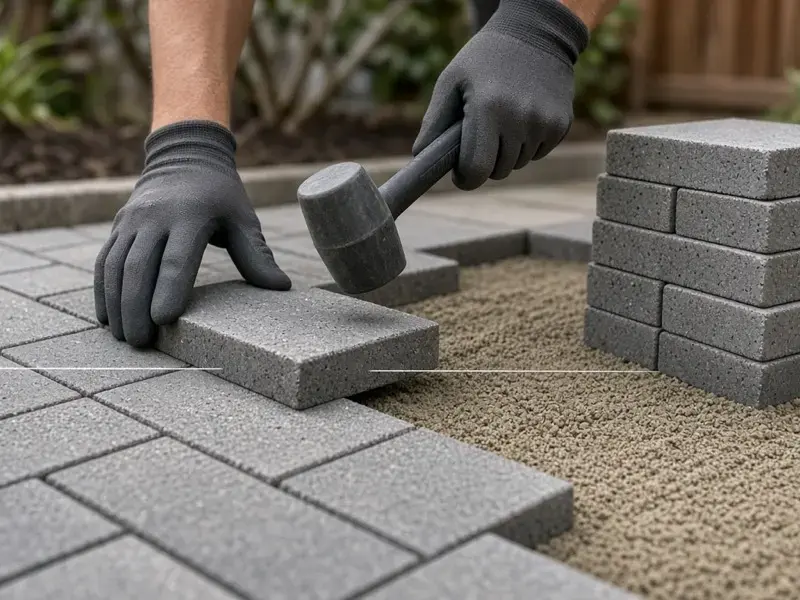
Herringbone, running bond, and custom layouts over a base built for Valley clay.
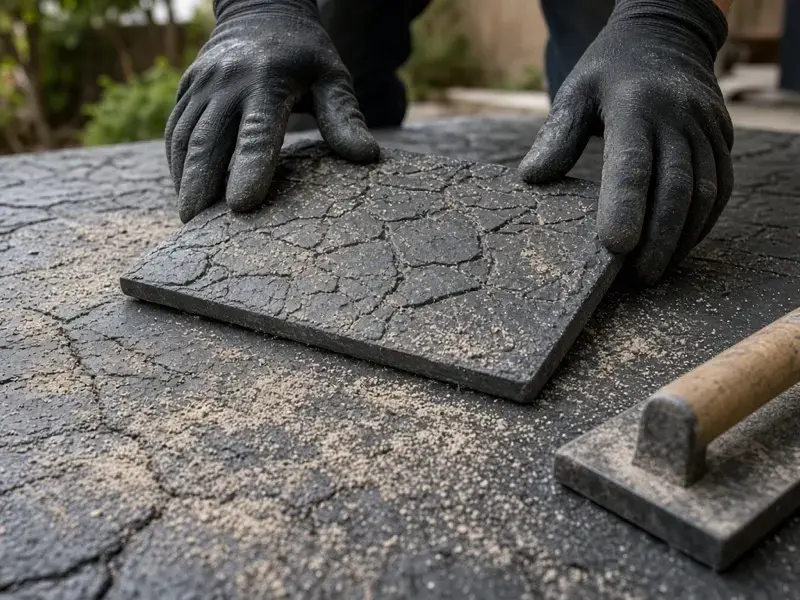
Textured, colored concrete that reads as slate, stone or timber without the joints.
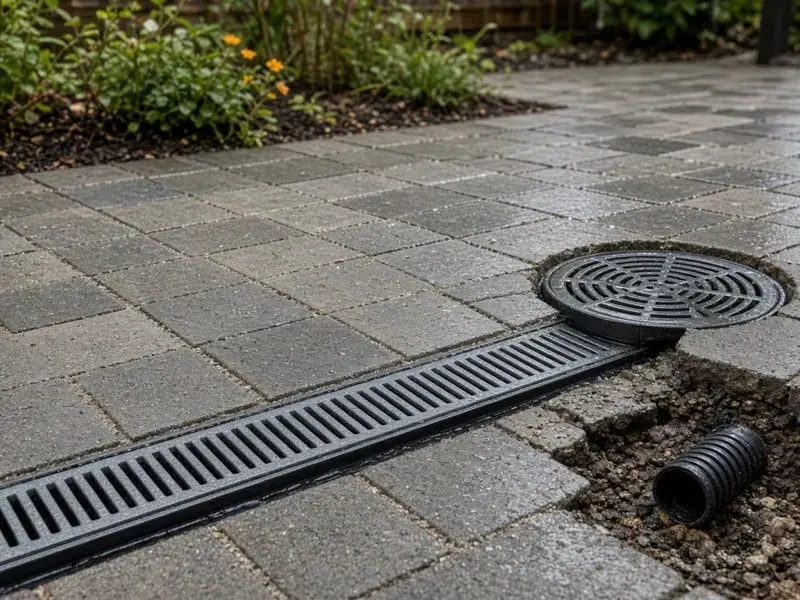
French drains, channel drains, catch basins and regrading for yards that hold water.
If the deck around your pool is too hot, too slick or draining the wrong way, San Jose Hardscapes can look at the shell, the slab and the grade, then recommend a paver and a build method that fit your yard. Call or send us a note, and we'll set up a visit to look at the pool together.