San JoseHardscapes
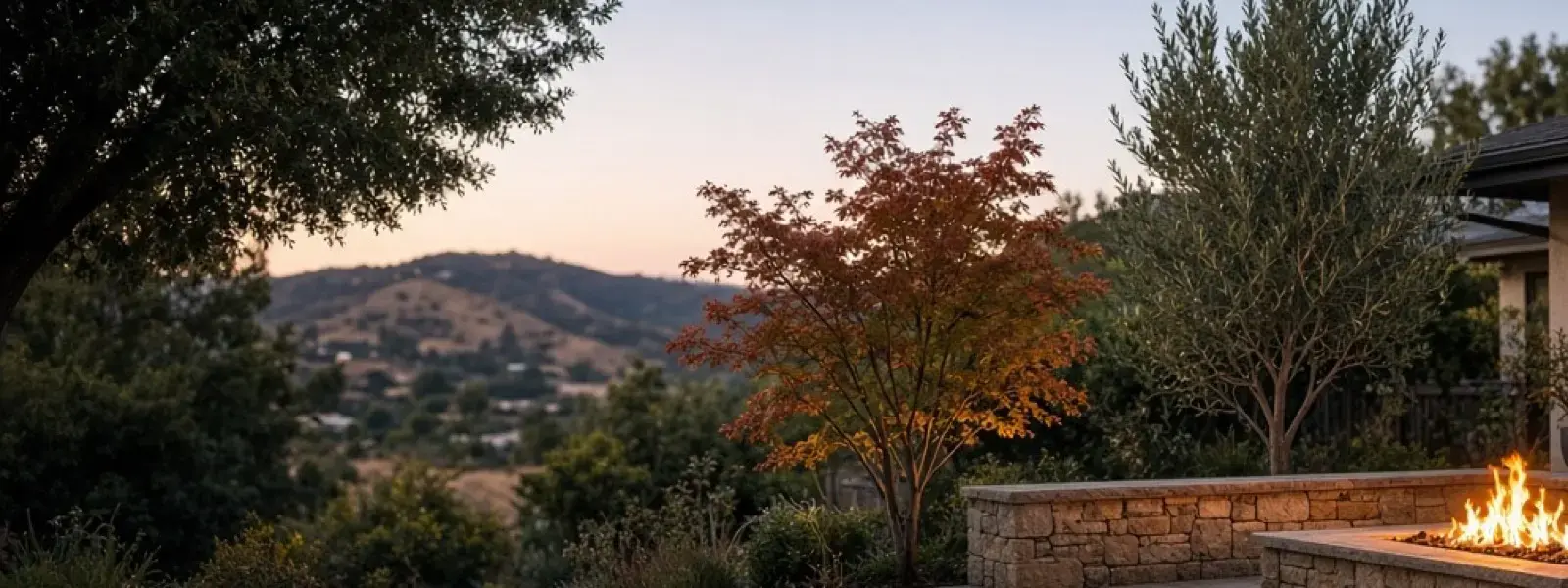
Finished backyard hardscape at dusk in the Santa Clara Valley with a paver patio, stone seating wall and gas fire feature

Where We Work

Hardscaping in Campbell, CA

Patios, walls, driveways and outdoor living for Campbell yards, built for the ground they sit on.

Hardscaping in Campbell

Campbell is mostly flat, older and tightly built, with bungalows and ranch homes on modest lots over heavy valley clay. Hardscaping here is usually about making small yards work harder: walkways, compact patios, driveway replacements and drainage that keeps water off old foundations.

Campbell has the feel of a small town inside a big valley, and the yards show it. San Jose Hardscapes does a lot of work in neighborhoods where the houses date from the 1920s through the 1950s, and the lots are smaller than what you'd find in the newer subdivisions farther south. A patio here isn't a sprawling slab. It's a few hundred square feet that has to earn its place.

Most of the ground is flat. That sounds easy, and it is for grading, but it also means water has nowhere dramatic to go. Clay holds it, old foundations take it in, and walkways heave when roots and moisture work on them from below.

Campbell also sits on land that was once covered in orchards, and you can still find the occasional old fruit tree on a residential lot. Those roots, along with the clay, are the two things we plan around more than anything else.
At a glance

Campbell in brief

Housing stock

Many bungalows and cottages from the early 1900s through the 1950s, with ranch homes filling in later.

Terrain

Mostly flat valley floor, so drainage depends on careful grading rather than natural slope.

Soil

Heavy clay is common, with silt and sand mixed in parts of town. Expect seasonal swell and shrink.

Creek corridor

The Los Gatos Creek trail runs through town, and work close to the creek can have extra setback rules. Ask the city and the water district.

Downtown

Older homes near the compact downtown often have narrow driveways, detached garages and very little side yard.

Local conditions

What changes in Campbell

01

Narrow lots leave little room to work

Side yards in older Campbell neighborhoods can be a few feet wide. That limits equipment, so we often use compact tracked machines, hand-carry material and haul spoil out by the wheelbarrow. It adds labor, and we plan for it up front rather than discovering it halfway through.

02

Old foundations meet new drainage

Many older homes sit on raised perimeter or post-and-pier foundations. Water pooling near them can cause rot, trapped moisture and settlement. We slope hard surfaces away from the house, and where that isn't possible, we use drains and gravel-filled trenches to move water out.

03

Clay and orchard-era roots

A clay subgrade moves seasonally, and old fruit trees or oversize street trees can push up concrete and pavers. We cut roots only when it's safe for the tree, lay root barriers or flexible sections near trunks, and choose materials that tolerate small movements.

04

Small yards mean every detail shows

In a 40-by-60 backyard, an uneven paver joint or a sloppy edge is visible from the kitchen window. We put extra attention into layout, cuts at borders, and clean transitions between materials like pavers, gravel and turf.

01

Bungalows, ranches and the backyard they came with

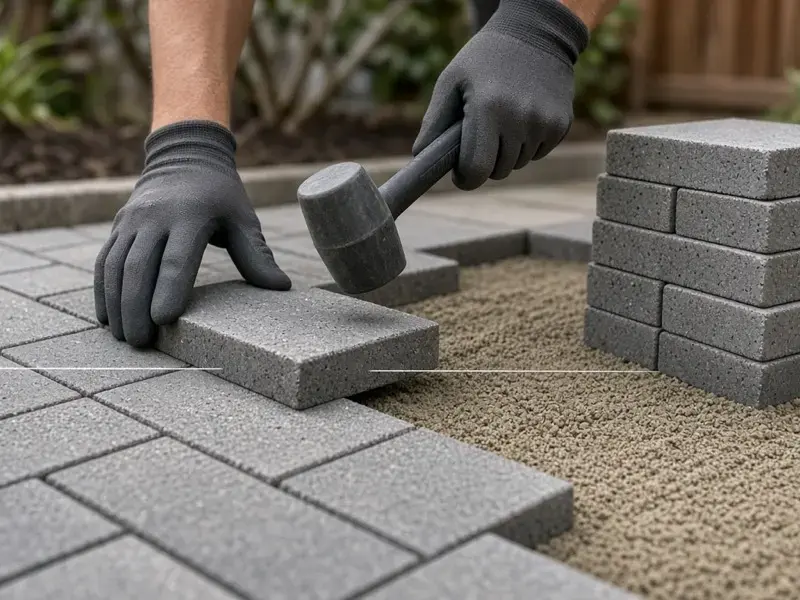
Campbell's older homes tend to have a modest back porch, a patch of lawn and a detached garage. When owners redo the yard, they usually want a defined outdoor room without losing every square foot of grass. A paver patio in a soft color with a clean soldier-course border suits these houses well, and it can be sized to the back door rather than overwhelming it.

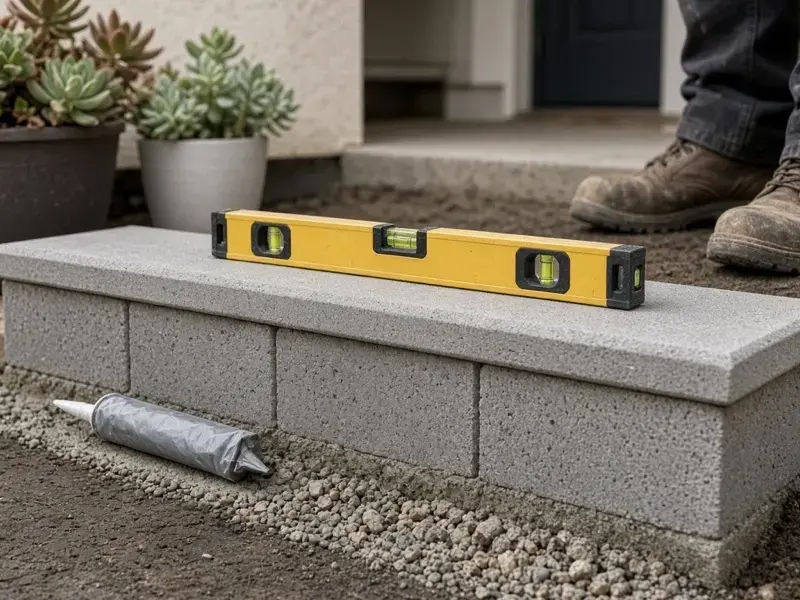
For the base, we dig deeper than most people expect. Clay subgrade, 6 to 8 inches of compacted crushed aggregate in lifts, a thin screeded bedding layer and edge restraint spiked about every foot. That's the difference between a patio that stays level and one that ripples after its second wet winter.

02

Walkways, driveways and the front of the house

In neighborhoods like these, curb appeal is a front-yard conversation. A paver walkway with a gentle curve and flush edges changes how an old bungalow reads from the street. Where the old path is cracked concrete, we remove it, correct the base and set the new surface at a slope that sheds water without making a trip hazard at the porch.

Narrow driveways are common, often with ribbon strips left over from an earlier era. Replacing them with a full-width concrete driveway or a paver apron takes some thought about where the water goes. We check the slope toward the street, the transition at the sidewalk, and whether any public-right-of-way work needs a permit from the city.

03

Water, flat ground and the creek corridor

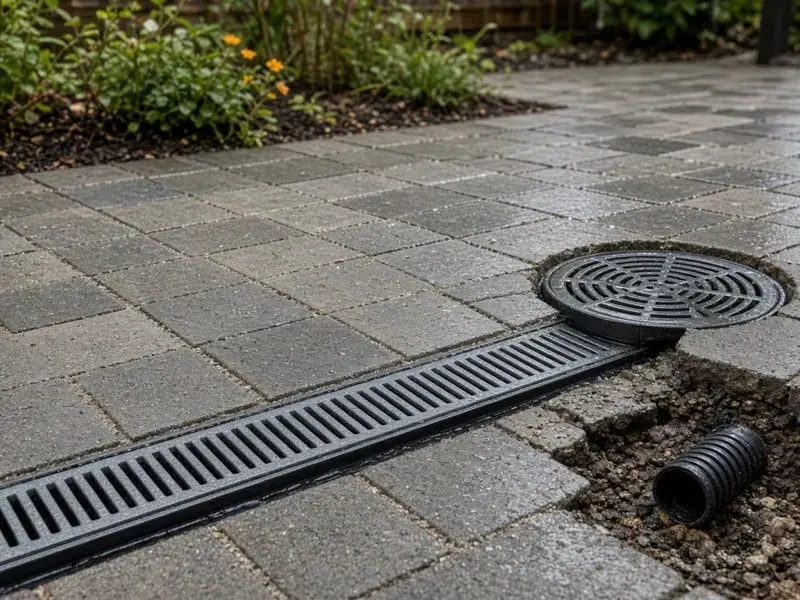
On flat lots, drainage is the project. If a backyard stays wet after rain, we look at where the water enters, where it could leave, and whether a French drain or a catch basin with a solid outlet is the right answer. A dry well isn't always possible on clay, so we usually run a pipe to the street or another approved discharge.

Properties near the Los Gatos Creek corridor may be subject to setbacks and extra review. Even if you're not right on the bank, groundwater can rise seasonally in parts of the area. We'd rather dig a test hole and look than guess.

04

Making a small yard feel finished

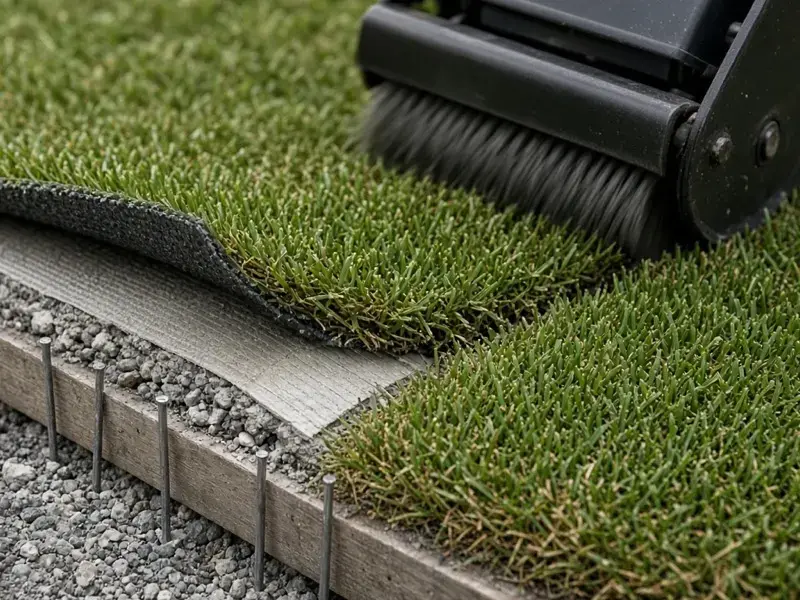
Campbell homeowners often ask for a mix of materials: pavers for the seating area, decomposed granite or gravel for secondary paths, and a patch of artificial turf for the dog or the kids. Done well, the transitions are crisp and the drainage is built in underneath, so the whole yard drains as one system.

Planning matters more than square footage here. A single pass with a laser level and a stringline at the start prevents a lot of headaches, and we'd rather spend an hour on layout than a day correcting it.

Popular in Campbell

What we build in Campbell

Questions

Campbell questions, answered

Can you work in the narrow side yards common in Campbell?

Usually, yes. We use small tracked equipment and hand labor when access is tight. It affects how we plan material delivery and spoil removal, so we look at the access path before quoting.

Why does my old concrete walkway keep heaving?

Clay swelling, tree roots and thin or missing base material are the usual causes. Replacing it with a proper compacted base and planned joints, or switching to pavers that can be reset, helps handle movement.

Do I need a permit to replace my driveway in Campbell?

Often, work that touches the public right-of-way, like the apron or sidewalk, needs a permit or inspection. A driveway entirely on private property may be simpler. Check with the city before work begins.

Is there a risk of groundwater near the creek trail?

Groundwater can be higher in parts of the valley floor, especially in wet seasons. We usually dig a test hole to see what's going on before finalizing a drain design.

What's the best material for an older bungalow?

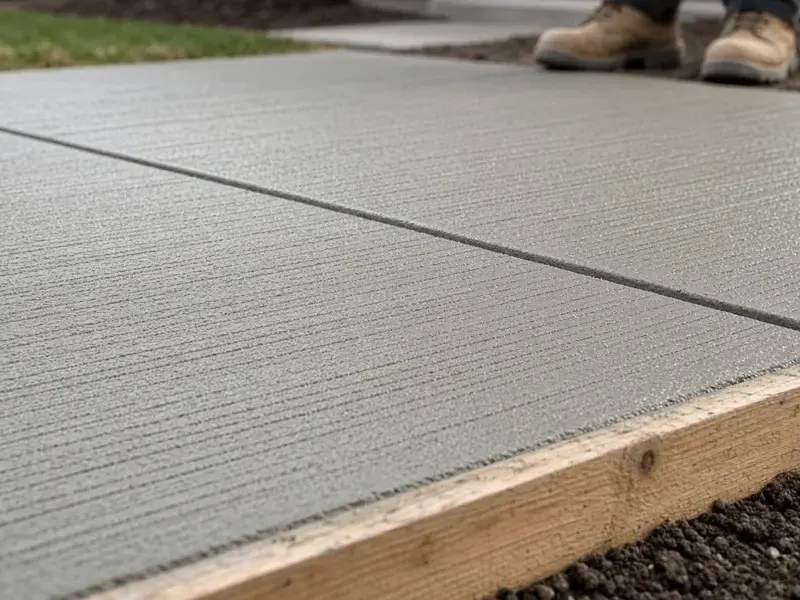
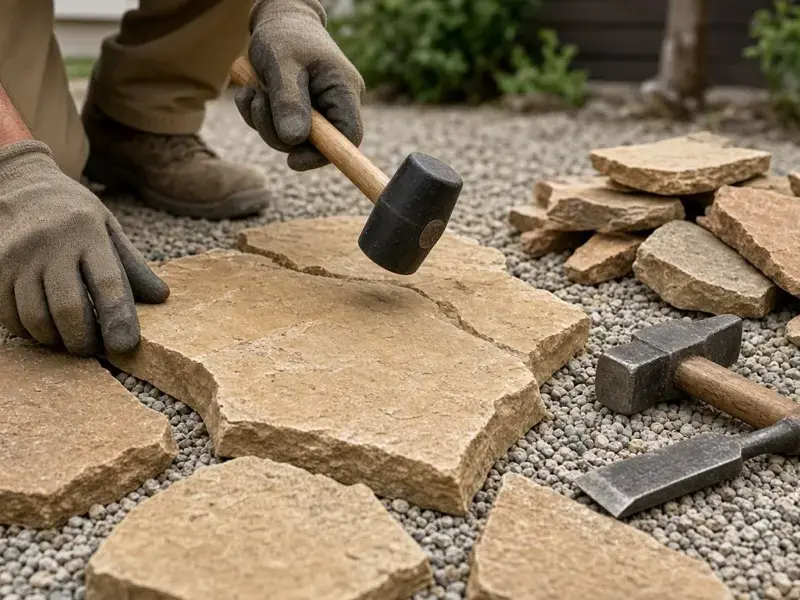
That depends on the house and the budget, but natural-looking pavers, flagstone and simple concrete with a broom finish all suit older homes. We'll show samples in person so you can judge them against your siding and roof.

Planning a project in Campbell?

If you've got a Campbell bungalow, a cracked walkway or a backyard that doesn't drain, San Jose Hardscapes would be glad to come by, look at the grade and talk through what makes sense for the lot and the house.