San JoseHardscapes
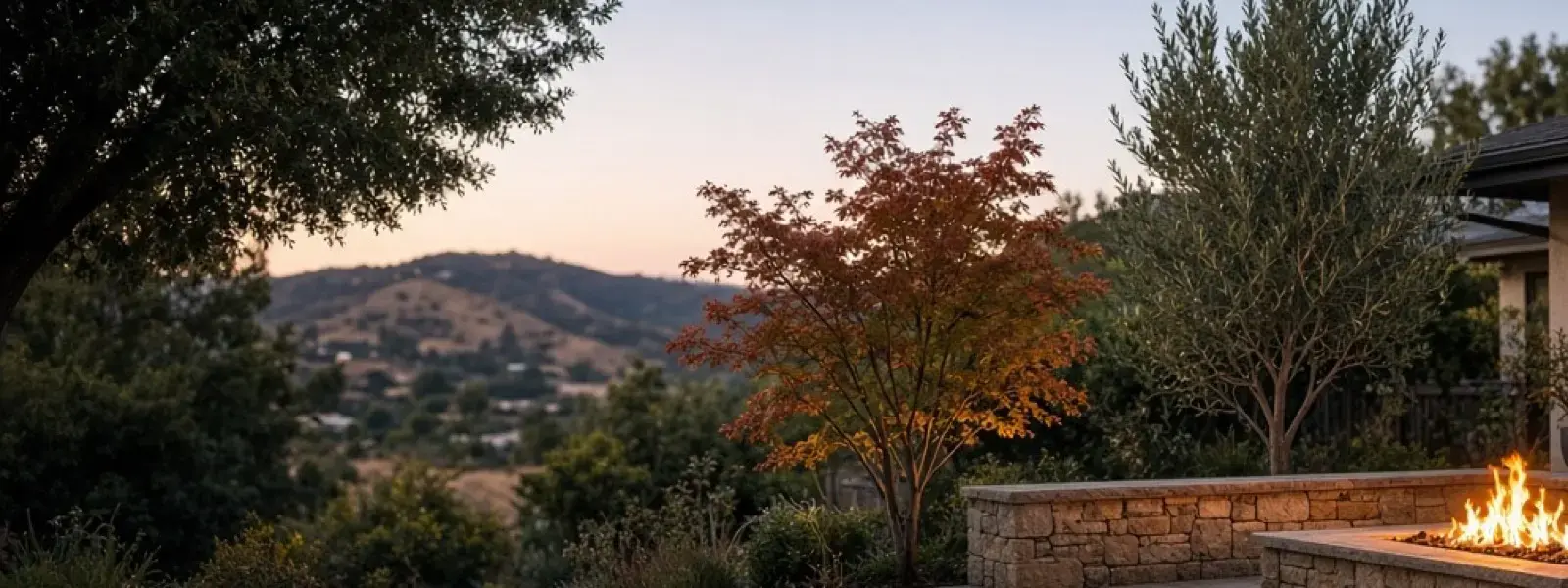
Finished backyard hardscape at dusk in the Santa Clara Valley with a paver patio, stone seating wall and gas fire feature

Where We Work

Hardscaping in Sunnyvale, CA

Patios, walls, driveways and outdoor living for Sunnyvale yards, built for the ground they sit on.

Hardscaping in Sunnyvale

Hardscaping in Sunnyvale usually means working on flat valley-floor lots with Bay-adjacent clay, mid-century ranch homes and a good number of Eichler-style tracts. We build paver patios, walkways, driveways and drainage that suit tight yards, slab-on-grade houses and the wet-season water that clay soil holds onto.

If you own a home in Sunnyvale, there's a decent chance it's a 1950s or 60s ranch, and in some tracts an Eichler-style house with a low roofline and a slab floor. San Jose Hardscapes builds patios, paths, driveways and drainage for exactly those lots. They're flat, they're usually not huge, and the dirt under them is clay that moves with the seasons.

That combination shapes almost every decision we make here. A flat lot means water has nowhere to run unless we give it somewhere. A slab house means we watch our grades at the wall very carefully. And a tight side yard means the machines we pick, and how we get material back there, matter as much as the pavers themselves.

At a glance

Sunnyvale in brief

Typical housing

Many Sunnyvale neighborhoods are 1950s and 60s ranch homes, with Eichler-style tracts in some areas.

Terrain

Mostly flat valley floor, so drainage is built by us, not handed over by the slope.

Soil

Expansive clay is common, and parts of the north side near the Bay can stay wet longer after storms.

Wet season

Roughly November through April, with atmospheric-river storms that can dump a lot at once.

Lot sizes

Often modest, with narrow side yards that limit equipment access.

Before you dig

Call 811 for utility locates. Permits for walls, larger structures and some paving often depend on the city, so check first.

Local conditions

What changes in Sunnyvale

01

Flat lots, so we create the fall

On a slope, water leaves on its own. Across most of Sunnyvale it doesn't. We set patio and walkway surfaces to fall away from the house at a minimum of 1/4 inch per foot, and we plan where that water ends up before we pour a single bag of base rock. If there's no good outlet, a drain line and a sensible discharge point come first.

02

Clay that swells and shrinks

Expansive clay holds water in winter and cracks open in a dry summer, and that movement pushes on whatever sits on top. We dig out the soft stuff, build a compacted aggregate base thick enough to spread the load, and keep irrigation and roof runoff off the edges. It's the unglamorous part, and it's what keeps edges from drifting.

03

Slab houses and Eichler-style details

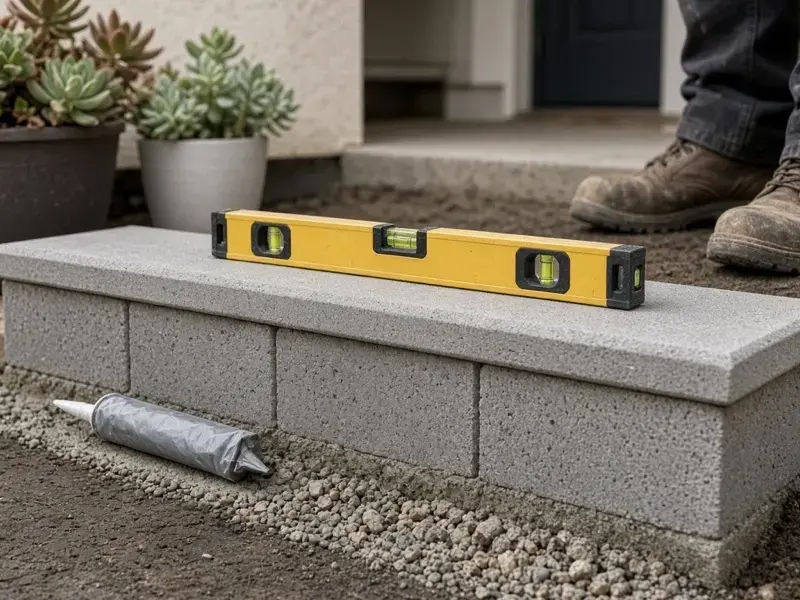
Slab-on-grade homes, including many Eichler-style houses, don't give you a raised foundation to hide a mistake. Finished paving should sit below the interior floor level with a clear drop away from the walls. If a house has radiant heat in the slab, we're careful with how deep we dig near it and we ask before cutting anything.

04

Tight yards and tight access

A lot of Sunnyvale backyards are reached through a side gate barely wider than a wheelbarrow. We plan for small compactors, hand-carried material and wheelbarrow runs, and we work out spoil removal before starting. It adds planning time, but it keeps a job from becoming a mess in a narrow side yard.

01

Patios and paths for Sunnyvale ranch homes

The classic Sunnyvale backyard has a thin concrete slab off the back door, maybe cracked from decades of clay movement, and a lawn that goes soggy in January. The most common project we see is replacing that slab with something better laid out. A paver patio works well here because the base is built to flex a little with the soil instead of fighting it, and if a section ever needs attention, it's a repair, not a demolition.

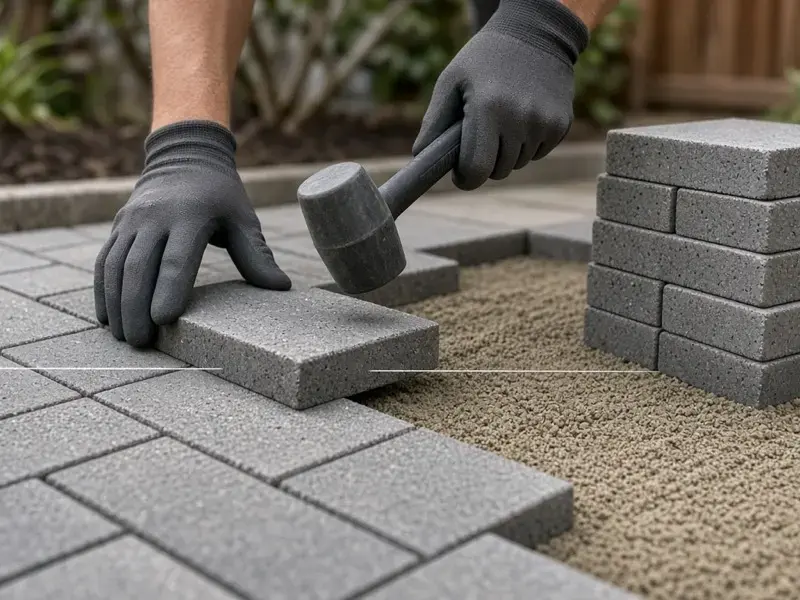
We typically excavate far enough to build 6 to 8 inches of compacted 3/4-inch minus base for patios on clay, compacted in lifts, then an inch of concrete sand bedding, then the pavers and polymeric sand. On pure clay with a history of heave we'd lean toward the thicker end. Edge restraint is spiked into the base every foot or so, because a patio with a loose edge is one that spreads.

Walkways get the same thinking at a smaller scale. A front path to a ranch entry crosses the same clay as the patio, so a paver walkway gets a proper base too, with a slight cross-slope so rain doesn't sit on it.

02

Water on a flat clay lot

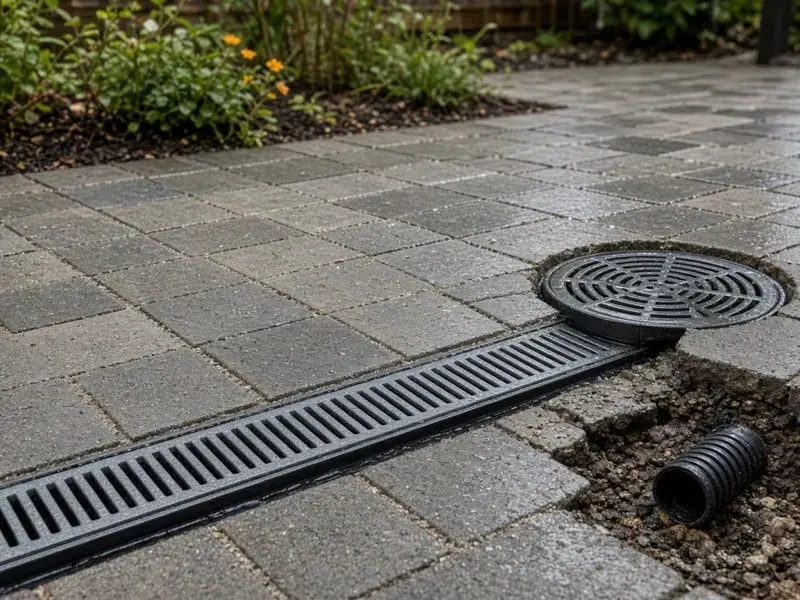
If you've got a back corner that stays wet well into spring, or water that pools against a slab edge after a big storm, that's a drainage problem to deal with before any paving goes down. A French drain uses perforated pipe set in clean washed drain rock, wrapped in non-woven fabric so the clay doesn't clog it. The pipe needs a steady fall to a legal, safe outlet, and on a flat lot finding that outlet is most of the job.

Near the north end of town, closer to the Bay, groundwater can sit higher in places, and some areas stay damp longer than inland parts of the city. We don't assume anything about a specific property. We look at where water collects, how the neighbors' grades slope, and where a drain can legally exit. Sometimes the answer is a surface swale, sometimes a drain line, and sometimes a dry well where the soil will actually take water.

One more thing worth saying. A patio that's built right but drains into the house is a bad patio. We set grades so water moves away from the walls, and where the lot is so flat that it can't, we say so up front and talk through the options.
03

Driveways, turf and the small projects

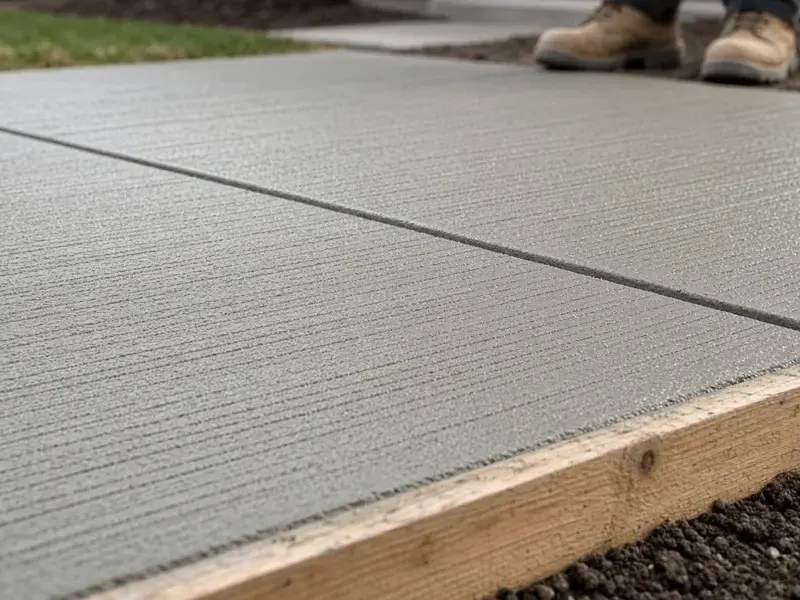
Plenty of homeowners here are redoing a tired concrete driveway or widening a parking pad. A concrete driveway needs the same discipline as any slab: compacted base, a reasonable thickness for vehicle loads, control joints cut early enough to guide cracks, and a mix that isn't over-watered. Clay under a driveway is why you see so many that crack in the same spots. Good base prep and joint layout help, though no slab on clay is crack-proof.

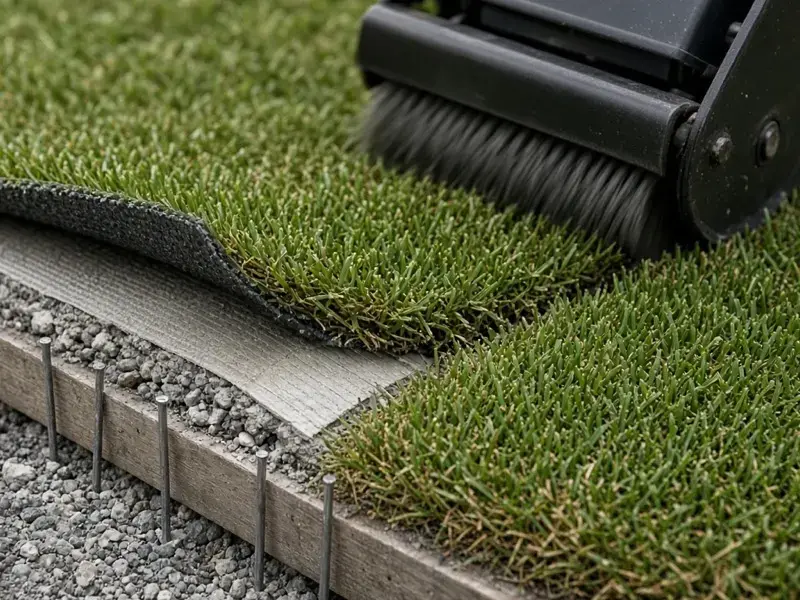
Artificial turf comes up a lot too, usually from people tired of watering a small back lawn during dry years. On clay it needs a drainage layer under it, typically compacted crushed aggregate graded to shed water, and a weed barrier at the base. We set edges against a rigid border so the turf doesn't creep. If you've got a dog, we'd talk through drainage and odor control up front.

Fire features are popular on small patios. Spare the Air days can limit wood burning, so many people choose a gas fire pit with a licensed gas connection. Check the rules for your property and any clearance needed from a fence or structure.

Popular in Sunnyvale

What we build in Sunnyvale

Questions

Sunnyvale questions, answered

Do pavers work on Sunnyvale clay soil?

They can, if the base is built for it. Clay swells in the wet season and shrinks in summer, so we dig out soft or organic soil and build a thick, compacted aggregate base that spreads the load. A flexible paver surface tolerates small movement better than a rigid slab. Drainage matters as much as the base, so we also plan where water goes.

I have an Eichler-style home. Does that change how you build a patio?

It can. Slab-on-grade houses leave little room between the interior floor and the finished outside surface, so we pay close attention to grades at the wall. Some Eichler-style slabs carry radiant heating, so we ask before digging near them. Some tracts also have design preferences, so check any HOA or neighborhood guidelines.

Can you work in a narrow side yard?

Usually, yes. We plan around small plate compactors, wheelbarrows and hand-carried material, and we work out spoil removal before we start. It takes more planning and sometimes more labor hours than an open lot, but access rarely rules a project out. We'll walk the route with you during the estimate.

Do I need a permit in Sunnyvale for a patio or retaining wall?

It depends on the project. Simple at-grade patios often don't, but walls over a certain height, structures, gas lines, electrical work and some drainage changes often do. Rules vary, so check with the city before you start. We'll tell you what we think is likely to apply and what we'd confirm.

Is a gas fire pit better than wood in Sunnyvale?

Many homeowners choose gas because Spare the Air days can restrict wood burning, and gas is cleaner and easier to control. It does need a proper gas line and clearances, which a licensed gas installer should handle. A wood pit may still be allowed on non-restricted days, but check current local rules.

Planning a project in Sunnyvale?

Sunnyvale yards are flat, clay-heavy and often tighter than they look from the street. San Jose Hardscapes builds with that in mind: water first, base second, surface last. If you're planning a patio, path, driveway or drainage fix, tell us about the house and the yard, and we'll talk through what makes sense for your lot.