You want a place to sit outside after dark
Evenings in the Valley cool off quickly, even in summer. A fire feature turns a patio that's empty at dusk into the place everyone ends up.
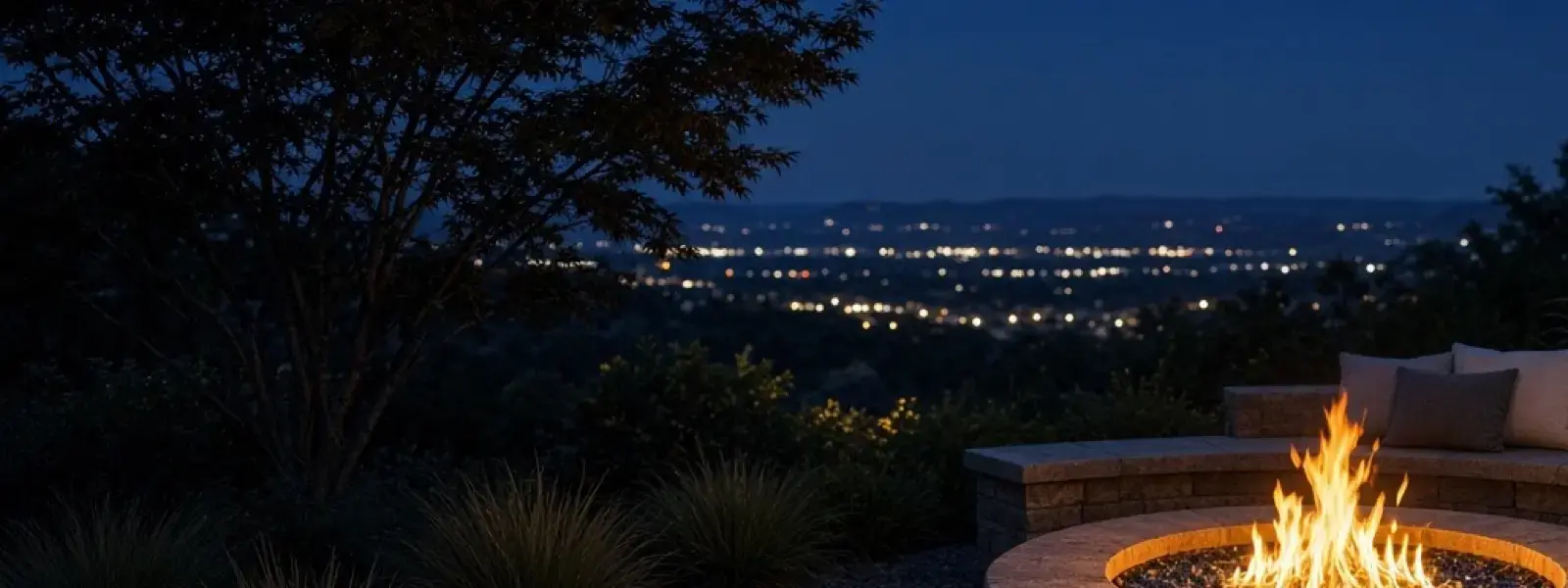
Hardscaping Services
Gas fire pits and outdoor fireplaces with the clearances, venting and seating that make them usable.
The short answer
A good fire pit is a gas or wood-burning appliance built into hardscape, so the details decide whether it gets used. We plan fuel type, burner size, a noncombustible base, clearances to the house, trees and overhead cover, seating distance, and ventilation. In the Bay Area, gas is common because wood burning can be restricted on Spare the Air days.
San Jose Hardscapes installs gas fire pits, wood-burning pits and outdoor fireplaces across San Jose and the Santa Clara Valley. A fire pit looks simple, a ring of stone with some flames in the middle. But the version that's comfortable on a cool evening and safe next to a wood fence is the result of a lot of small decisions about fuel, base, clearance, wind and seating.
In this part of California, fuel is the first decision. The Bay Area Air Quality Management District calls Spare the Air alerts on days when smoke would worsen air quality, and wood burning can be restricted on those days. Rules change and differ by location, so check current guidance before you plan around a wood fire. That's one big reason a lot of local homeowners choose gas.
We handle the footing and base, the gas line and burner or the masonry firebox, the surround, and the seating. If you're also thinking about a cooking area, we can plan it next to an outdoor kitchen so the gas, the lighting and the traffic flow all match up.
Why people call
Evenings in the Valley cool off quickly, even in summer. A fire feature turns a patio that's empty at dusk into the place everyone ends up.
Spare the Air days, neighbors with sensitive lungs or an HOA rule about smoke all push people toward gas. A gas burner gives you flame without ash or smoke.
Steel bowls on a stand sit on a hot surface, tip over, and rust. A permanent pit with a proper base solves all three.
Running a gas line and building a base is far easier while the patio is open. We can build the pit as part of the new surface rather than cutting into a finished one.
A back corner or a slope that's wasted space can become the best seat in the house once there's a fire feature and a low wall to sit on.
What's in the job
We pick the spot by measuring the distance to the house, fences, trees and any overhead cover. Wind direction, neighbors and sightlines come into it too. A great design in the wrong place is just a source of smoke complaints.
The pit sits on a compacted aggregate base with a concrete slab or ring beam, or on a paver or flagstone patio engineered for the heat. We don't set a fire pit directly on a lawn, wood deck or bark mulch.
For gas pits we size the burner to the pit and the gas supply, then fill the pan with fire glass or lava rock. For wood pits we build a firebox with a lining that handles direct flame.
A licensed trade runs the gas line with a shutoff, and we set up the ignition type that suits your use, from a manual key valve to an electronic spark or a wall switch. Pressure testing happens before anything is covered.
The surround is built in stone, block with veneer, or pavers. Seating walls go in at comfortable heights and distances so people can sit close enough for warmth but far enough from the flame.
We finish with a cap stone or coping that sheds water, test the burner, and walk you through ignition, shutoff and the care of the media, so you're comfortable using it from day one.
The build
We measure to structures, fences and trees, note overhead branches and eaves, and mark wind direction. We also talk through wood versus gas and what you plan to do around the fire.
A plumbed gas line, a propane connection or a built outdoor fireplace may need a permit, depending on your city and scope. Check with the city early. In fire-hazard areas, the local fire department may have its own requirements.
We excavate to firm subgrade, compact a 4 to 6 inch crushed aggregate base, and form a slab or ring footing under the pit walls. Gas conduit or sleeves are set before the pour.
The gas line goes in at the right size with a shutoff and pressure test. The burner pan is set level on its support, connected, and checked for leaks and proper flame spread.
We lay the pit walls in block, stone or brick, and line wood-burning pits with firebrick. Gas pits need ventilation openings in the base where the fuel type calls for them.
The veneer, cap and seating walls go on, with the cap sloped slightly so water sheds. Seating heights and distance from the flame are checked against how people will actually sit.
Fire glass or lava rock goes in last, laid to the burner manufacturer's depth. We light it, test the ignition and shutoff, and show you how to operate and cover the pit.
Technical detail
A wood fire has a smell and a crackle gas can't match. It also means ash, smoke, and a rule check every time you want to light it. The Bay Area Air Quality Management District has a wood-burning rule and issues Spare the Air alerts when conditions call for them, so wood fires can be off the table on certain days. Rules and enforcement change, and individual cities may add their own, so it pays to check the current guidance before you commit to one fuel.
Gas fire pits start with a push of a button or a turn of a key, shut off just as easily, and leave no ash. They also don't throw embers, which matters in dry months and in foothill neighborhoods. The trade-off is that gas needs a supply and a licensed hookup, and you don't get that smell of burning wood. Plenty of homeowners end up with gas as the daily choice and a wood-burning outdoor fireplace for special occasions, where it's allowed.
Natural gas, propane tank, or a plumbed propane line all work. Natural gas is steady and continuous. A standard 20-pound propane cylinder holds roughly 4 to 5 gallons of fuel, which on a high-output burner may last only a few hours, so many people choose a larger tank or a plumbed supply.
Burner output is measured in BTUs per hour. Residential pits commonly run in the range of tens of thousands of BTUs up to over a hundred thousand, depending on size and burner design. More BTUs isn't automatically better. A big burner in a small pit can scorch the surround and fatigue the media. We match the burner to the pit diameter and to the gas line's capacity, and we follow the burner manufacturer's clearances above the media and to the sides.
Ignition choices run from match-lit, which is the simplest, to a key valve, to electronic spark ignition with a flame sensor, and wall switches or remote controls. Electronic ignition needs power or batteries and is more convenient, though it adds components that sit outdoors. Whichever one you choose, a gas shutoff valve should be easy to reach, and the system should shut off cleanly when you're done.
On top of the burner goes the media. Tempered fire glass is made for the job, it doesn't pop and it comes in many colors. Lava rock is a lower-profile option and works well as a base layer under glass. We don't use river rock or random landscape stone. Porous or damp stone can trap moisture, and when it heats quickly it can crack or spall violently.
Clearance rules come from several sources: the manufacturer's listing, local code, and plain common sense about where sparks and radiant heat go. As a general guide, we keep the pit well away from the house, wood fences and overhanging branches, and we never put one under a low patio cover. Many installations call for something like 10 feet of clear headroom above the flame and a comfortable buffer to structures, but your burner's instructions and your city's rules are what govern.
Seating is its own geometry. A seating wall about 18 inches high is a comfortable sitting height, and the seat should sit roughly 3 to 4 feet out from the edge of the fire. Closer than that and people are too hot on the front and cold on the back. Farther and the fire just becomes decoration. We usually add a back-cap ledge wide enough to set a drink down, and leave breaks in the wall for walking through.
Wind matters more than people expect. In the Valley, evening breezes often pick up and blow flame or smoke toward whoever's sitting downwind. We check how air moves through the yard before we pick the location, and a low windguard or a taller pit wall on the prevailing side can make a real difference to comfort.
A fire table is a gas feature with a tabletop edge around a burner, and some have an enclosure that holds a propane tank. Enclosed cabinets need ventilation at the right heights so propane doesn't collect and heat doesn't build up. The same goes for built-in gas pits, where the base often has vent openings. We never block them with stone or mulch afterward.
An outdoor fireplace is a different build from a fire pit. It has a firebox, a flue or chimney, and a hearth, and it throws heat in one direction. Wood-burning versions raise smoke, spark and clearance questions, and many call for a spark arrestor screen on the chimney, often with openings around a half inch. Some cities treat a masonry fireplace as a structure that needs a permit and an engineered footing.
Carbon monoxide is the safety point that gets overlooked. A fire pit belongs in open air. Putting one under a solid roof or inside a walled-in space, even on a gas feature, can let CO and combustion gases accumulate. If you want fire under an overhead structure, the setup needs a design and approval that fits it, not just a burner dropped in.
Spec sheet
Failure modes
Most failures trace back to a handful of shortcuts. These are the ones we see most.
Radiant heat and embers can scorch fences and branches over time. Measure to every structure and canopy before you pick the spot.
Porous stone holds moisture. Heated fast, it can crack or burst. Tempered fire glass or lava rock is made for the burner.
Vent openings in the base let gas and heat escape. Packing them with stone or soil can create a dangerous buildup.
Seat 3 to 4 feet from the flame and most people stay comfortable. Closer and it's too hot, farther and the warmth never reaches anyone.
Wood burning can be restricted on Spare the Air days and in some fire-hazard areas. Check current rules, or build gas so you can use it any evening.
Santa Clara Valley ground
Many San Jose flatland yards are modest in size, with wood fences close to the property line and patio covers right off the house. That tightens clearances quickly. On a 5,000 to 8,000 square foot lot, a fire pit often has to sit right in the middle of the patio to clear everything, which is why layout and seating comfort get so much of our attention.
Foothill areas like Almaden, the Evergreen foothills, Los Gatos and Saratoga bring dry vegetation, steeper terrain and, in places, mapped fire-hazard areas. Wood fires can face tighter limits there, and the local fire department may have views on clearance and spark control. Check with your city and fire district before you plan a wood-burning feature, and consider gas where embers are a concern.
On the ground side, our clay soils shift with the seasons. A heavy masonry pit needs a proper footing, not just a base of gravel, and the surrounding patio should be built to move a little without the pit shifting independently. Drainage matters too, and we often tie the pit into the layout of a flagstone patio or a paver patio.
Questions
It depends on the day and the location. Spare the Air alerts from the Bay Area Air Quality Management District can limit wood burning, and cities and fire districts may add their own rules. Always check current guidance before lighting one, and ask about foothill fire-hazard areas.
Output is measured in BTUs per hour, and residential burners typically range from tens of thousands to well over 100,000. The right size depends on pit diameter, gas supply and how much heat you want. We pair the burner to the pit instead of picking the biggest one.
Yes. A standard 20-pound cylinder is often hidden in a ventilated cabinet or fire table. At high output it may only run a few hours, so some homeowners step up to a larger tank or have a plumbed propane line installed.
A pit is open on all sides and radiates heat around a circle. A fireplace has a firebox and chimney and pushes heat in one direction. Fireplaces tend to involve a heavier footing, a spark arrestor if wood-burning, and sometimes a permit.
Roughly 3 to 4 feet from the edge of the flame is comfortable for most people, with a seating wall about 18 inches high. We adjust for pit size, burner output and how much wind hits the area.
They do different jobs. Tempered fire glass looks great and reflects the flame, while lava rock is a lower-profile base layer that helps spread gas. Many installs use lava rock underneath and glass on top.
Be careful. Fire under a solid roof raises heat and carbon monoxide concerns, and the burner listing has overhead clearance requirements. It may be possible with the right design and approvals, but it isn't something to improvise.
Often for gas lines and for built masonry fireplaces, less often for a simple portable bowl. It depends on your city, fuel type and size. Check with your building department and fire district, and we'll tell you what to ask.
Related work
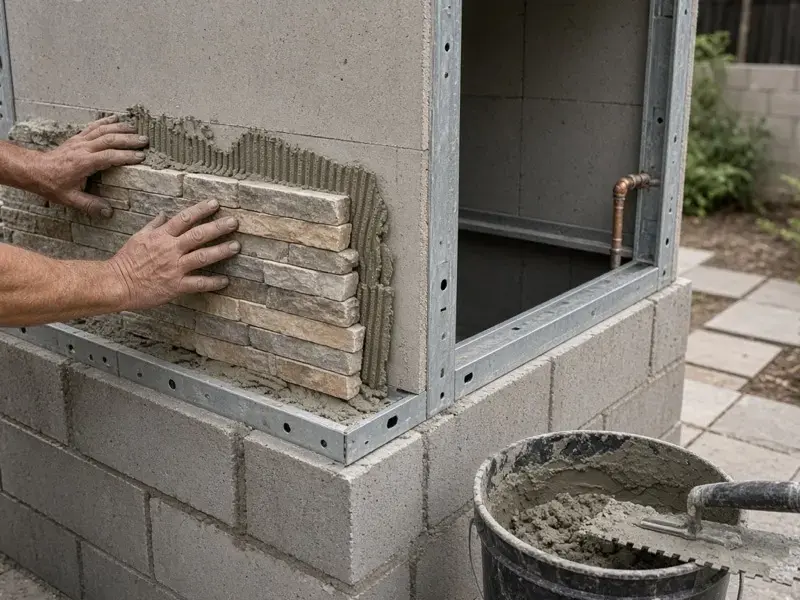
Custom islands with built-in grills, countertops, refrigeration, gas, power and lighting.
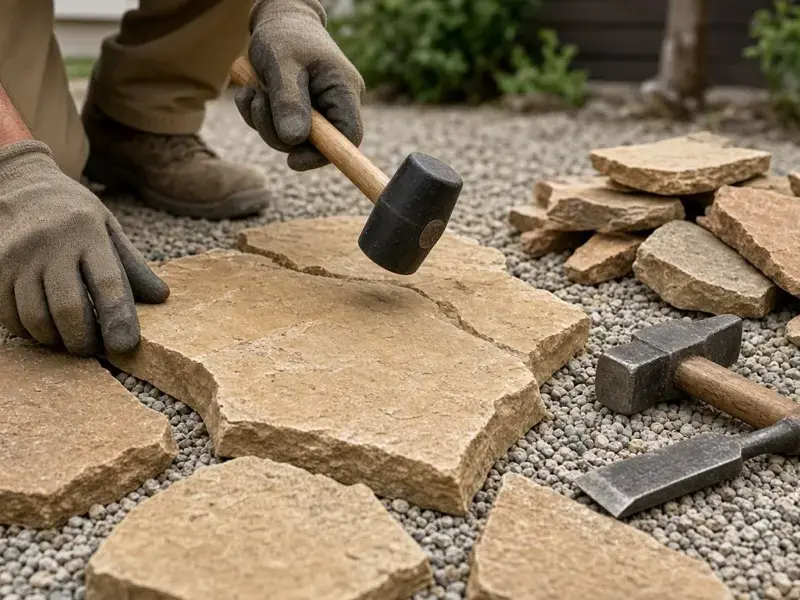
Natural flagstone, bluestone and travertine, fitted by hand and set to last.
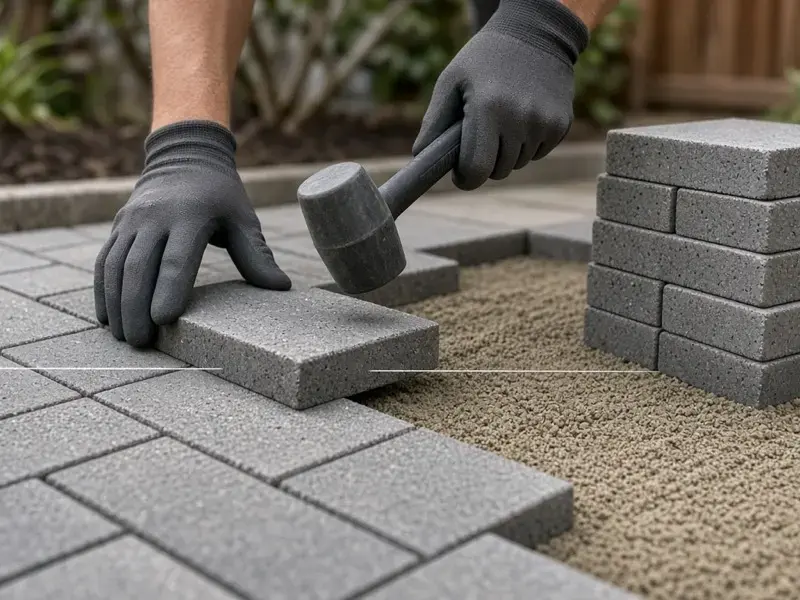
Herringbone, running bond, and custom layouts over a base built for Valley clay.
If you've been picturing a fire pit and a few friends on a cool evening, San Jose Hardscapes can help you work out the fuel, the base, the clearances and the seating before anything gets built. Call or send a short note, and we'll come out, walk the yard, and talk through what will work on your lot.