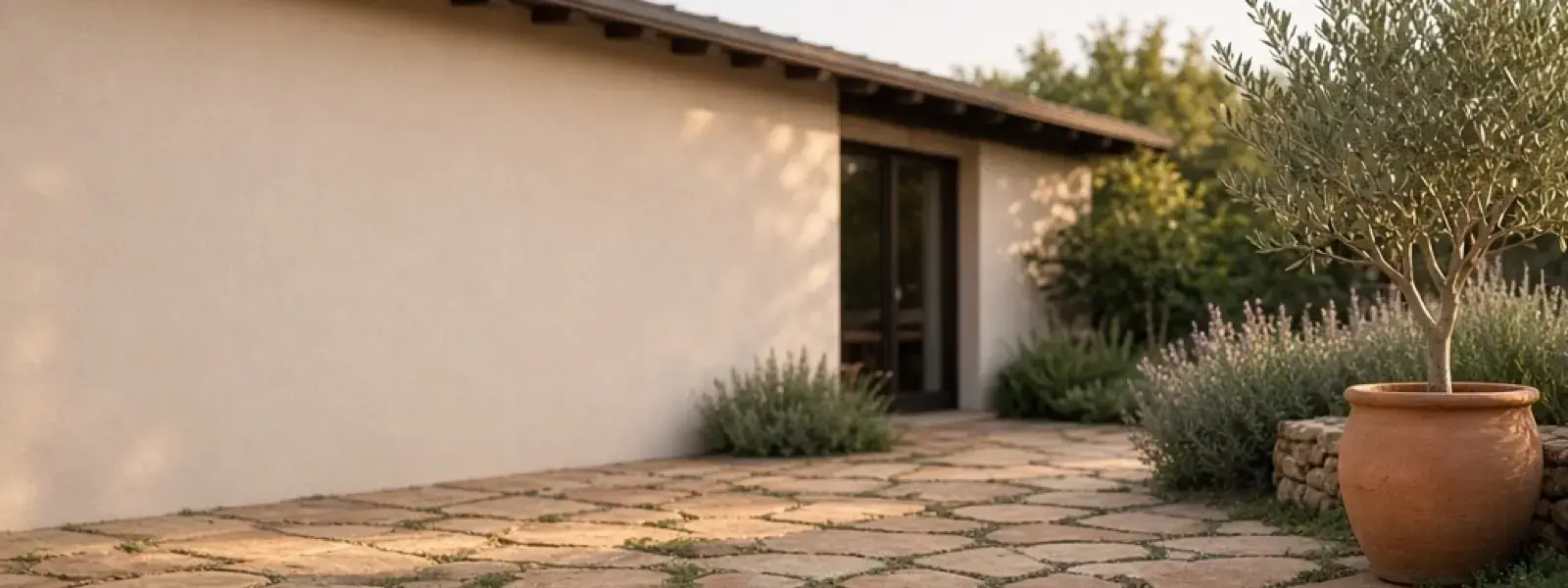
Arizona flagstone is a sandstone with warm tones from tan to rust. It's common in California patios, usually sold as irregular pieces or as rectangles. It's fairly porous, which makes it good for traction but also lets it take on stains. Bluestone, from the Northeast, is dense, fine-grained and typically gray-blue, available in thermal finish for texture or natural cleft for a rougher look. Quartzite is hard, durable and often has a glittering, mica-like sparkle. Sandstone varies from soft pink to buff to brown, and some varieties are softer and wear faster.
Travertine is a limestone with a pale, creamy look that suits modern designs and pool areas. Its natural pores are often filled at the factory, and it's sensitive to acids, so food spills and some cleaners can etch it. Outdoors it's usually chosen in tumbled or honed finishes for traction. Whatever stone you pick, ask to see the actual material and not just a photo, because color and texture vary from quarry to quarry.
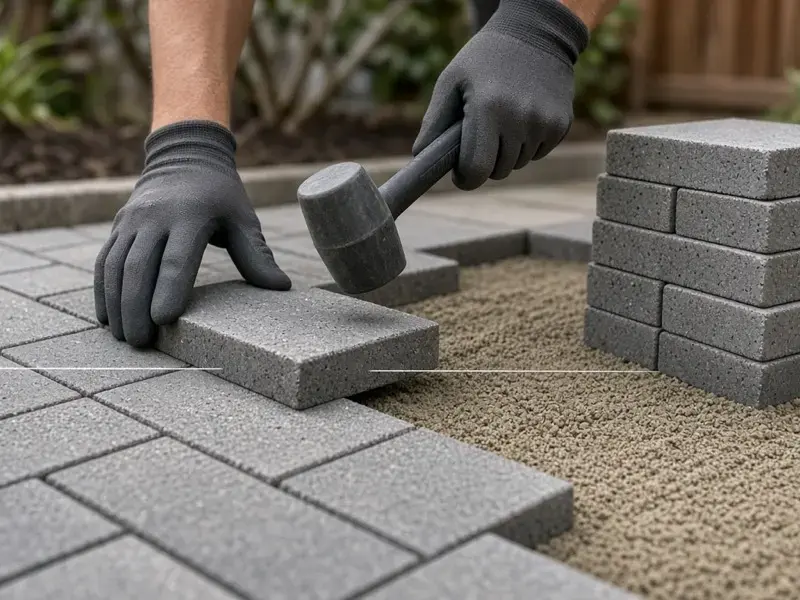
Thickness is a practical issue. For dry-laid patios, stones around 1.5 to 2 inches thick are easier to keep stable on a sand or stone dust bed, and thinner pieces can rock or crack under load. Mortar-set stone can be thinner, often 1 to 1.5 inches, because the slab and mortar support it. Larger pieces generally sit more stable than small ones. We like a mix of large anchor stones and smaller infill, with no piece so small that it can be kicked loose.