Water bill and drought rules
Lawns use a lot of irrigation water in dry Valley summers. Periodic drought restrictions and higher water costs push many homeowners to look at turf replacement.
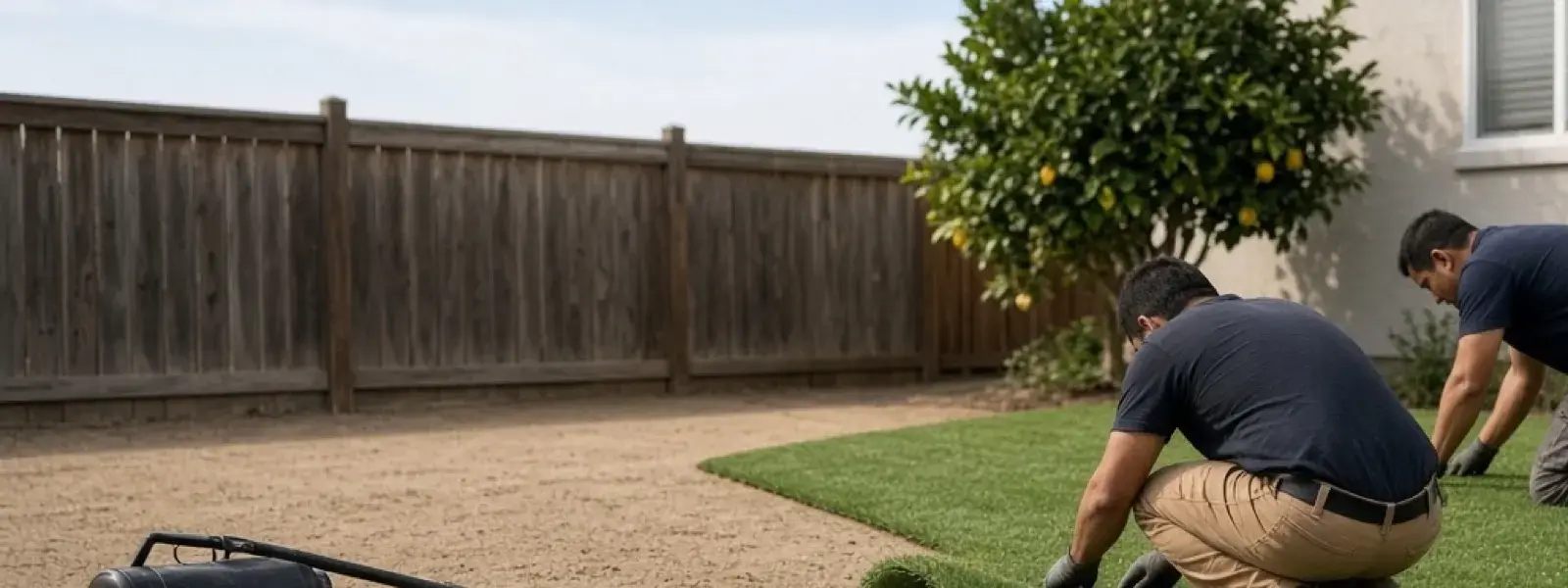
Hardscaping Services
Drainage-first turf installs over compacted base, seamed tight and brushed upright.
The short answer
Good artificial turf is mostly base work. We excavate about 3 to 4 inches, compact class 2 base or decomposed granite in lifts, shape a gentle slope for drainage, lay a weed barrier, then roll, seam, nail and infill the turf. On Valley clay, drainage under the turf decides whether the lawn stays flat and odor-free.
People think artificial turf is a carpet you roll out over dirt. It isn't, and that's the reason so many installs end up wavy, smelly or full of weeds at the seams. San Jose Hardscapes treats a turf install like a small paving job: dig out, build a compacted base, set the slope, and only then lay the grass. The synthetic blades are the last 10 percent of the work.
Santa Clara Valley is a good place for turf in some ways and a tricky one in others. Dry summers and periodic drought make a lawn that needs no mowing or watering attractive, and plenty of homeowners here are tired of the water bill and the weekend mowing. But expansive clay under the yard drains slowly, so a base that doesn't shed water can turn the turf into a sponge during the wet season.
On this page we walk through what a proper install includes: depth, base, slope, backing and pile, infill, seaming and edging. We'll also get into pets, summer heat, tree roots, HOA rules and the water-use conversation, since a lot of people ask about rebates and drought rules. If you want a straight answer on whether turf fits your yard, call us and we'll look at it with you.
Why people call
Lawns use a lot of irrigation water in dry Valley summers. Periodic drought restrictions and higher water costs push many homeowners to look at turf replacement.
Shade from big trees, compacted clay and dog damage leave a lawn thin and muddy. Turf solves the lack of sun, though shade-heavy sites still need drainage and root planning.
Dogs dig up natural grass, burn it with urine and track mud inside. A pet-rated turf install with a proper base and drainage cleans up easily with a hose.
Newer townhomes have small patches of yard where mowing is more trouble than it's worth. Turf gives a clean green surface with little maintenance.
Some folks want a tidy front or back yard without a mower, edger and sprinklers. Turf trims that time down, though it still needs rinsing and occasional brushing.
What's in the job
We look at how water currently moves across the area, what's under it (clay, old sod, irrigation, roots), where the turf meets patios, fences and planting beds, and where it will drain. We mark irrigation and utilities, call 811, and lay out edges, seams and slope direction before we dig.
We strip the existing lawn and excavate to the depth needed for the base, typically around 3 to 4 inches below finished grade, more where the soil is soft or the turf needs a deeper base. Roots, rocks and soft spots come out. Irrigation heads get capped below grade.
Class 2 aggregate base, decomposed granite or a crushed aggregate goes in as a compacted layer, in lifts if the depth calls for it, then gets shaped and rolled. The base is what makes the turf flat, firm and free-draining, and it's most of the labor.
A woven or non-woven weed barrier goes over the compacted base. Perimeter edge restraint, such as bender board, a concrete curb or aluminum edging, gives the turf something solid to be nailed to and keeps the base from migrating out under the edge.
Turf is rolled out in one direction so the pile lies the same way, trimmed to fit, seamed with seam tape and adhesive, and nailed around the perimeter. We stretch it tight so there are no wrinkles and fit around trees, pavers and planters with clean cuts.
Infill is spread evenly, either silica sand, coated sand or an antimicrobial option for pet areas. A power broom stands the blades up, mixes the infill into the pile and finishes the surface. We clean up and haul away old sod.
The build
After 811 locates, we cut and remove the existing lawn with a sod cutter or excavator, depending on size. Irrigation lines get capped, and any lines that stay in place get protected. If trees are close, we hand-dig near roots.
We dig about 3 to 4 inches below finish grade, deeper where needed, and shape the subgrade to the final slope. Soft spots, buried debris and old irrigation get removed. We compact the subgrade so the base sits on something firm.
Class 2 aggregate base, decomposed granite or crushed aggregate goes in as a compacted base layer. We place it in lifts if it's thick, wet it lightly and compact with a plate compactor, aiming for a dense, even surface. On clay, we check slope and drainage outlets as we go.
The top of the base is screeded smooth and sloped, usually at least about 1 to 2 percent, so water sheds off. The weed barrier goes down flat with overlaps, held in place with a few nails.
Edge restraint is fastened in place, then the turf rolls out with the pile direction consistent. We let it relax, trim it tight to the edges and cut around obstacles, then pull it flat.
Seams get tape and adhesive, with the edges butted tight and the stitching lines lined up so no gap shows. We nail the perimeter every few inches, often around 4 to 6 inches apart, and add fasteners as the layout calls for.
Infill goes down in even passes and gets worked in by the power broom, which also stands the blades up. We walk the surface with you to check slope, edges and seams, and show you how to rinse and maintain it.
Technical detail
Turf doesn't hide anything. Every low spot, bump or soft patch in the base shows up on the surface. That's why we excavate to around 3 to 4 inches, deeper over soft soil or where the project calls for it, and replace what we remove with compacted aggregate. Class 2 aggregate base is a well-graded crushed rock that compacts to a firm, stable layer. Decomposed granite is a common alternative, especially for pet areas and light-use lawns, and crushed aggregate works too.
Compaction is the step that separates a flat turf from a wavy one. We place the base in lifts when it's thick, lightly moisten it, and run a plate compactor over it until the surface is dense and consistent. Using a standard like ASTM D698 (Standard Proctor) is typical on bigger, structural projects, while on a residential lawn we aim for the same idea: firm, even and no pumping or pillowing under foot.
We also check the subgrade. If the clay below is soft or holding water, a few extra inches of base, a drain connection, or a change of slope may be needed. Throwing turf over wet clay is the fastest way to get a spongy, smelly lawn.
Turf should shed water as a surface and also let it drain through. Good turf backing has perforations, and the base underneath should be free-draining. But clay under the base can hold water, so the surface also needs a slope, typically at least about 1 to 2 percent, to move water to a drain, planter or edge. Flat turf over clay holds water at the bottom of the base like a pan.
We shape the base so it sheds toward a safe outlet. Sometimes that's a lawn edge that drains into a planting bed, and sometimes it's a channel drain, a catch basin or a French drain at the low edge. Where water collects at a fence line or against a patio, we work out a French drain or a drain tied into solid pipe before the turf goes on. Draining turf by waiting and hoping isn't a plan.
A weed barrier does not replace drainage. It sits on top of the base to slow weeds from coming up through the rock, and good ones let water through. We use one that drains properly. A plastic sheet under turf will hold water and smell.
Pile height is how long the blades are. For residential lawns, roughly 1 1/4 to 2 inches is common, with shorter pile for high-traffic and pet areas and longer pile for a plush look. Face weight is the weight of the fibers per square yard, which gives a rough sense of density. Higher isn't automatically better, because quality of fiber, stitch rate and backing all matter. We pick a product by use, sun exposure and pets.
Backing is the layer the fibers are stitched into. Look for a dual-layer backing with a coating, and for pet and wet-climate yards, perforated backing, often polyurethane, so water drains through the turf rather than puddling on it. Thin, low-grade backing or poorly punched holes slow drainage and hold odor.
Infill sits between the blades. Silica sand is the standard: it weighs the turf down, supports the blades and protects the backing from sun. Coated sand reduces odor and dust and usually costs more up front. Antimicrobial or zeolite-based infills are used where pets are a concern. The right one depends on use, and we'll talk through options with you. Infill depth matters too, so the blades stand but still move naturally.
Seams are where installs fail visually. Two rolls of turf are placed with the pile running the same direction, the edges are trimmed with a sharp blade on the back so the stitch line is clean, and the seam is made with seam tape and adhesive under the joint. Fibers get pulled out of the glue line so the seam disappears. Gaps, flipped pile direction or glue squeezed up into the blades make a seam look like a scar.
Edges need restraint. The base and turf can creep without a solid border, and the edges can lift. Bender board, a concrete curb, pavers, aluminum edging and existing walkways all work, and we pick one based on the style and the use. The turf is then nailed to the edge restraint or into the base every few inches around the perimeter, often about 4 to 6 inches, with spikes that grab compacted base.
Power brooming is the finishing step. A rotating bristle broom stands the fibers up and works infill into the pile. It makes the difference between a flat, matted look and a natural one. We broom in several directions, and we recommend an occasional brush as part of upkeep.
Dogs and turf can get along, but pet areas need more care. A pet-rated turf with perforated backing, a free-draining base and an antimicrobial or zeolite-type infill helps with odor. Solid waste gets picked up and the area gets rinsed. Urine drains through the turf and into the base, so the base has to be free-draining. A base that holds water or a backing that blocks drainage is where odor comes from.
Heat is real. Synthetic turf can get noticeably hotter than natural grass in direct sun, because grass cools itself by evaporating water and plastic doesn't. Shade, lighter-colored fibers, certain infills and a quick rinse before use can help, and some products are marketed as cooler. We don't promise a surface temperature. We suggest where shade is, and where a different surface might serve better for bare feet.
Trees and roots matter. Excavating 3 to 4 inches can cut surface roots, which can hurt a tree, so we hand-dig near trunks and talk to you about leaving root zones alone or using an arborist. And remember that tree litter will still land on turf and need blowing off. HOAs often have rules about artificial turf in front yards, and some restrict color, pile or visibility. Check with your HOA first. As for water use, local water district turf-replacement rebate programs have existed in the Santa Clara Valley, but rules and eligibility change, and some programs have excluded synthetic turf. Check current availability before you plan around any rebate.
Spec sheet
Failure modes
Most failures trace back to a handful of shortcuts. These are the ones we see most.
One inch of sand over dirt gives a lawn that ripples, sags and puddles. A compacted aggregate base, 3 to 4 inches or more, is what keeps turf flat and drained.
No slope and no outlet means water sits in the base. Turf then stays damp and starts to smell. Shape the grade, add a drain where needed, and use perforated backing.
Seams made without tape and adhesive, or with the pile flipped, show up as lines. Edges nailed too far apart lift and wrinkle. Tight seams and a solid edge restraint are non-negotiable.
Without infill, blades lie flat and the backing sees more sun and wear. In pet areas, the wrong infill holds odor. Pick infill for the actual use.
Cutting roots to hit the depth can hurt a tree, and an HOA can ask you to remove turf that wasn't approved. Both are avoidable with a hand-dug root zone and a quick check with the HOA.
Santa Clara Valley ground
The Valley's Mediterranean climate gives us long dry summers, and a natural lawn here often needs a lot of irrigation to stay green. Periodic droughts and water-use restrictions have pushed many people to think about turf. At the same time, the wet season, roughly November to April, tests how well a turf base drains. A turf lawn that looks great in August can pool and stay damp in February if the base sits on saturated clay and has no outlet.
Clay is the main local factor. Many flatland yards sit on expansive soil that swells when wet and holds water, so we focus on a compacted free-draining base, a slope to an outlet, and a backing that drains. In foothill areas like Almaden, Los Gatos and Saratoga, soil can be rockier and sloped, and turf on a slope needs extra attention to base compaction, edge restraint and anchoring so it doesn't creep.
Rules vary. Water districts have run turf-replacement programs in the past, but eligibility, funding and what counts as eligible change from year to year, so check current availability before you build around one. HOAs frequently have say over front yards and visible turf. And if your yard borders a creek, the city may have setback and drainage rules. We'll tell you what to check, and we'll plan the project around what you learn.
Questions
Typically about 3 to 4 inches below final grade, then we fill with compacted base. Over soft soil or where the base needs to be thicker, we go deeper. The goal is a firm, flat, free-draining surface under the turf.
Class 2 aggregate base, decomposed granite or crushed aggregate, all compacted in lifts and sloped for drainage. The right one depends on use. DG is common for pet areas and light use, while class 2 base is popular for general lawns.
It can if the base is built to drain. We compact a free-draining aggregate base, slope it to an outlet, and use turf with perforated backing. If the clay below holds a lot of water, we add a drain at the low edge.
It can, usually because of poor drainage or the wrong infill. A free-draining base, perforated backing and an antimicrobial or zeolite-type infill help. Pick up waste and rinse the area regularly.
Hotter than natural grass in direct sun, because plastic doesn't cool by evaporation. Shade, lighter fibers, some infills and a rinse can help. For bare feet or pets in full sun, it's worth thinking about shade or a different surface in part of the yard.
Silica sand is the standard and holds the blades up. Coated sand reduces dust and odor and usually costs more up front. Antimicrobial or zeolite-based infills target pet odor. We recommend one based on how you use the yard.
Local water district turf-replacement programs have existed in the Santa Clara Valley, but eligibility and funding change, and some programs have excluded synthetic turf. Check current availability with the water district before you plan around a rebate.
Often, yes, especially for front yards. Many HOAs set rules on turf color, pile, edges and visibility. Check your CC&Rs and get written approval before work starts.
Related work
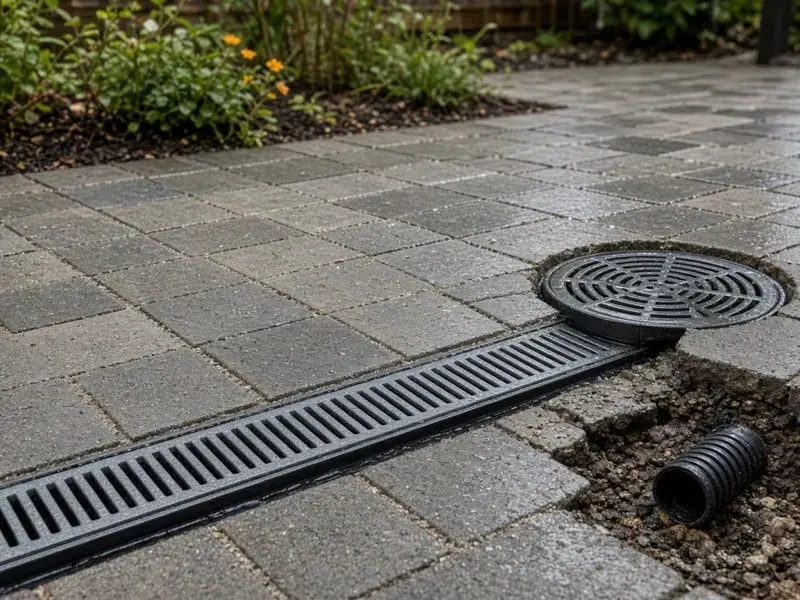
French drains, channel drains, catch basins and regrading for yards that hold water.
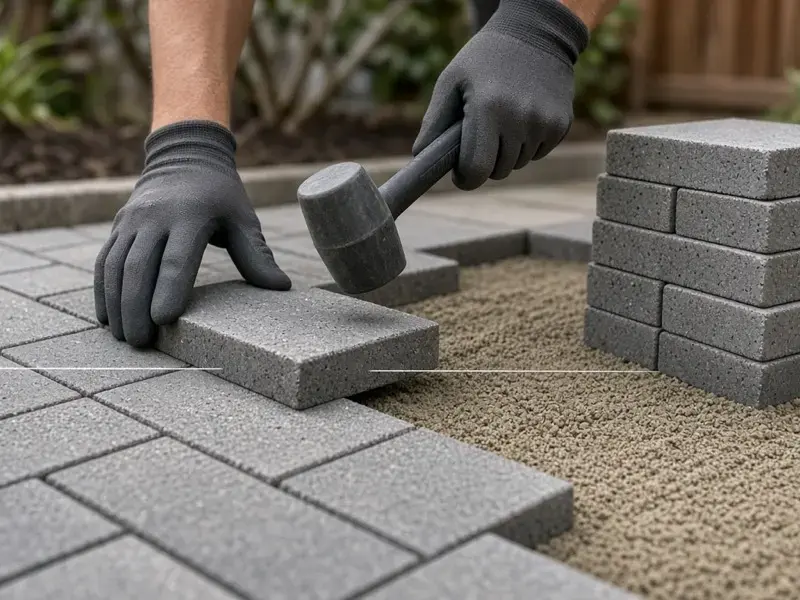
Herringbone, running bond, and custom layouts over a base built for Valley clay.
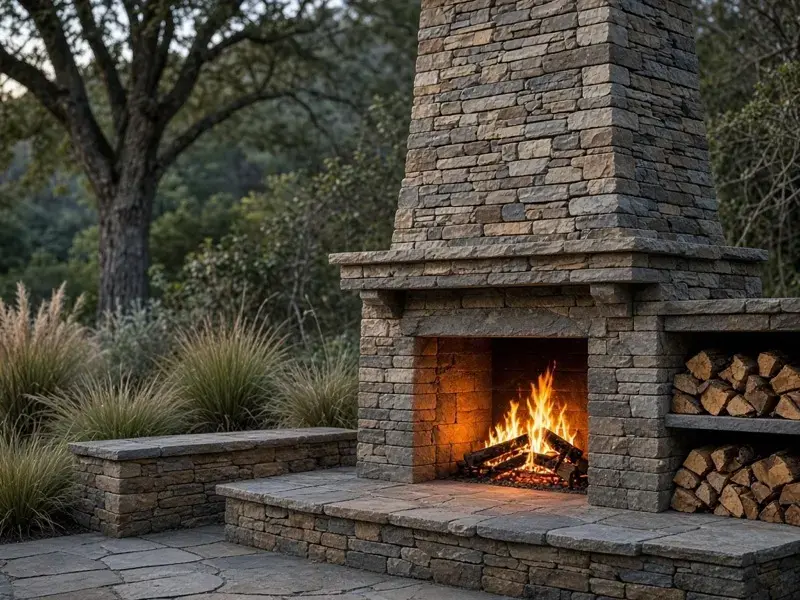
Gas fire pits, stacked-stone fireplaces and seating walls built to local clearances.
If you want a lawn that doesn't need a mower and still drains in a wet January, San Jose Hardscapes can look at your yard, talk through base, slope, turf type and edging, and give you straight answers about drainage on clay. Many turf yards pair nicely with a paver patio for seating and a fire pit for evenings.