Slopes drive the design
A change of a few feet across a yard usually means a wall, steps or a terrace. We design the grade first so the patio, drain and wall all work together.
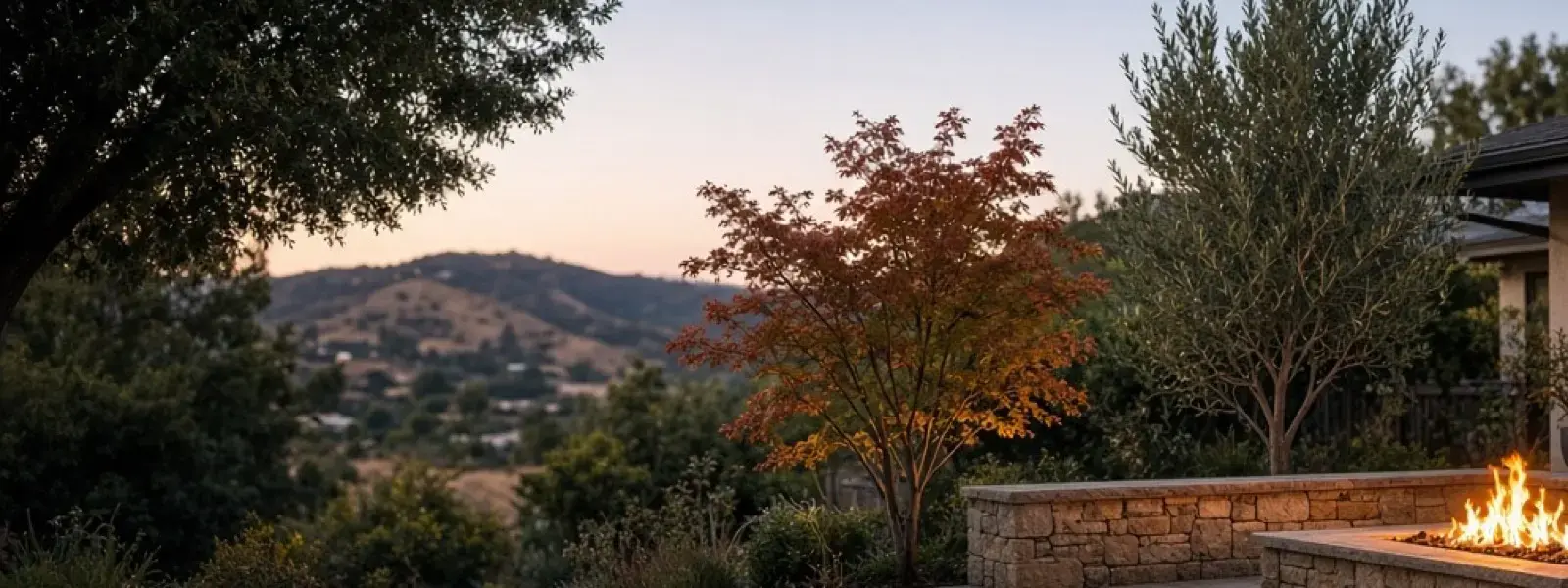
Where We Work
Patios, walls, driveways and outdoor living for Saratoga yards, built for the ground they sit on.
Hardscaping in Saratoga
Saratoga hardscaping is mostly about wooded lots at the edge of the foothills, where slopes, shallow rocky soil, creeks and wildfire exposure shape every decision. Expect retaining walls, terraced patios and drainage work to come first, with pavers, stone and fire features added once the ground is under control.
San Jose Hardscapes builds in Saratoga on lots that look nothing like a flat tract yard. Parcels tend to be larger, often wooded, and many sit where the valley floor starts climbing toward the hills. One side of the property can be level and the other can drop several feet, and that change in grade is usually the whole project.
So we start with the ground, not the surface. Where does the water come from, where does it go, how deep is soil before we hit rock or hardpan, and what is holding the slope up now? Once those answers are clear, a terraced patio, a driveway or a new set of steps becomes much easier to design and price honestly.
At a glance
Setting
Wooded neighborhoods on the foothill edge, with many larger parcels and a mix of flat and sloped lots.
Slope and soil
Hillside lots often have shallow, rocky or clay-rich soil over weathered rock. Flatter parts of town lean toward valley clay and alluvium.
Creeks
Saratoga Creek and smaller tributaries run through town. Work near a bank often has setback and permit questions.
Fire exposure
Parts of Saratoga sit in or near wildfire-hazard zones. Non-combustible hardscape is common around the house.
Tree rules
The city likely has rules about removing or working around protected trees. Check with city staff before cutting or trenching.
Typical projects
Terraced patios, retaining walls, stone steps, long driveways, drainage work and gas fire features.
Local conditions
A change of a few feet across a yard usually means a wall, steps or a terrace. We design the grade first so the patio, drain and wall all work together.
On hillsides we can hit rock or hardpan close to the surface. That affects how deep we can excavate, how we anchor walls and where water goes after a storm.
Hardscape near the house can act as a buffer. Gravel, stone and pavers slow the spread of ground fire better than mulch, and we use non-combustible materials near structures.
Protected trees and creek corridors can add permits, setbacks or special handling. We plan around them early so work isn't stopped mid-project.
01
A lot of Saratoga yards have one useful flat area and a slope that could be something better. A terrace is the usual answer. We cut into the hill, build a wall to hold the cut, and end up with a level pad for a patio or a seating area. The wall is the part that needs the most care, and it's why we look hard at a retaining wall contractor scope before we talk about finishes.
Segmental block walls over a few feet tall usually need a compacted base, geogrid layers that run back into the slope, and a drainage zone behind the wall with perforated pipe and clean washed rock. Taller walls or ones holding a driveway or a structure often need an engineer and a permit. Check with the city, because the height trigger and the rules about what's behind the wall can change.
On rocky hillsides we sometimes can't drive posts or dig deep footings the way we would in flat soil. We might use a wider base, a stepped footing or a different wall system, and we'll tell you why.
02
Longer, curving driveways are common in the hills, and the grade can get steep. Surface choice matters. Brushed concrete gives good traction and holds a tight edge, pavers handle small movement but need a heavier base on a slope, and stamped finishes can get slick when wet if they're sealed too glossy. We'll walk the grade with a level and tell you what we'd pick for your slope, whether that's concrete or pavers.
Stone or concrete steps are a natural fit for sloped gardens. We set consistent risers and treads (uneven steps are what actually cause trips), add landings where the path turns, and usually build on a compacted aggregate base so winter rain doesn't wash out the footing under the first step.
03
Winter storms can load a hillside fast. Water moves across the surface, soaks in at the top of a slope and shows up at the bottom, sometimes behind a wall that wasn't built to handle it. We plan for that with surface swales, drain pipe behind walls and a clear path to a safe discharge. A French drain is often part of a Saratoga hardscape job even when the owner called about a patio.
Fire is the other thing that changes how we build. Many owners want a zone of stone, gravel or pavers close to the house that gives the structure a buffer. Gas fire features are the norm in dry months, and we locate them away from low branches, roof overhangs and dry brush. We can't tell you what defensible space your property needs, so ask your local fire authority and your insurer.
04
When the structure is sorted out, the fun part is the seating area. Many Saratoga owners want a patio that feels tucked into the trees, with natural stone, a fire feature and enough shade to use it in summer. Flagstone tends to fit this setting well. Irregular stone, tight joints and a warm color blend with oak leaf litter and redwood bark better than bright, uniform concrete.
We keep roots in mind here too. Oak roots can run well out from the trunk, and some trees don't like grade changes or compaction near the base. We sometimes set a patio on a lighter base, leave planted gaps or step the pad around the tree.
Popular in Saratoga
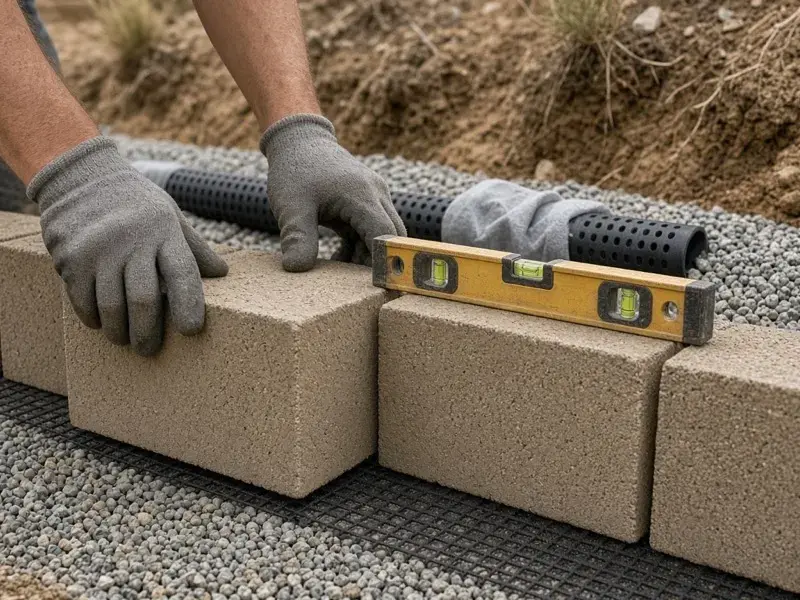
Our most common Saratoga job. We cut into the slope, build a drained, geogrid-reinforced block wall where it fits, and tell you plainly when height or surcharge means you need an engineer and a permit before we break ground.
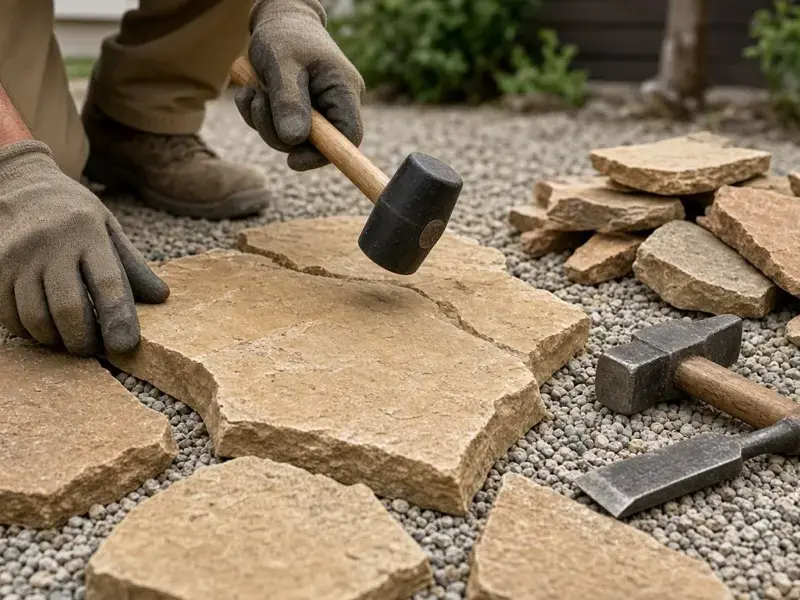
Irregular natural stone suits wooded Saratoga lots. We set it on a compacted base with tight joints, step the pad to follow the grade, and pick stone tones that sit comfortably with oaks and redwoods, so the finished patio looks like it grew there.
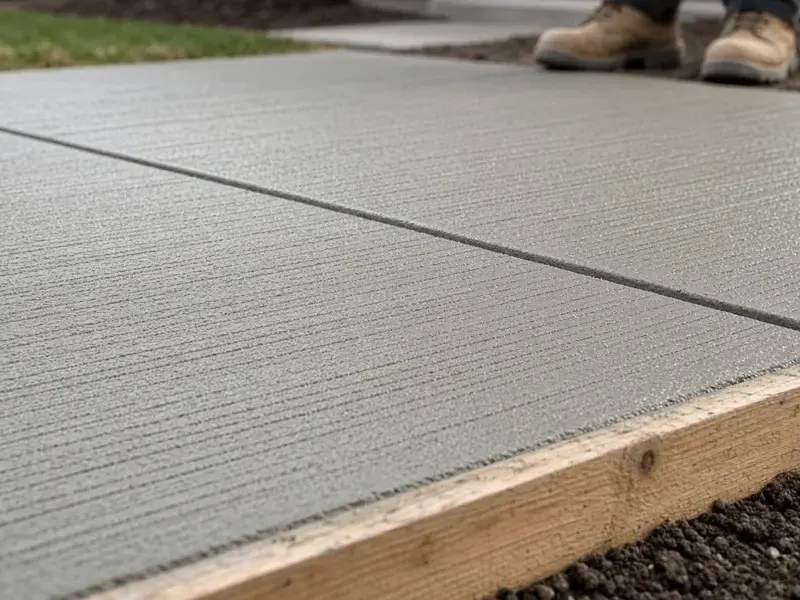
For steep or curving drives in the hills, brushed concrete gives traction and holds shape. We form with the right slope for drainage, place reinforcement and control joints, and plan a way to move runoff off the surface.
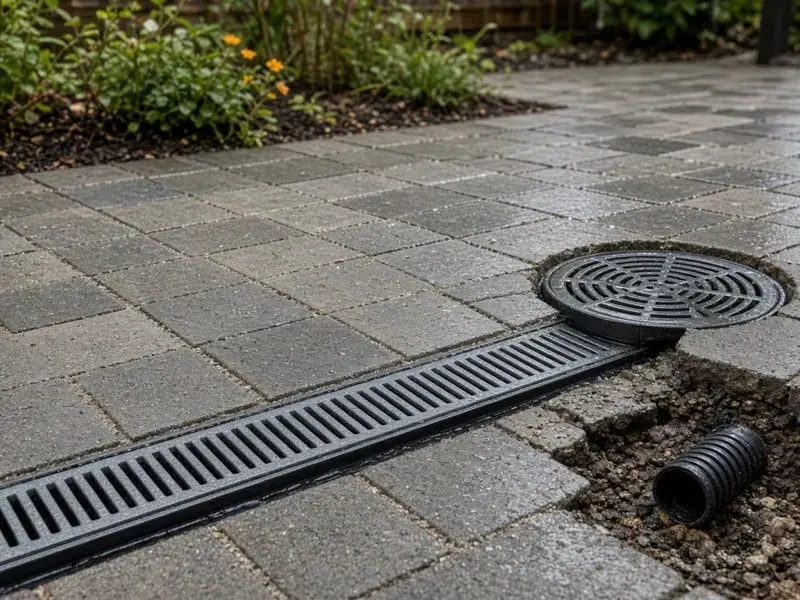
Hillside runoff and creek-edge lots mean water needs a planned path. We locate where it collects, set perforated pipe in fabric-wrapped washed rock, and route it to a safe discharge away from walls, footings and the house, with cleanouts so the line can be flushed later.
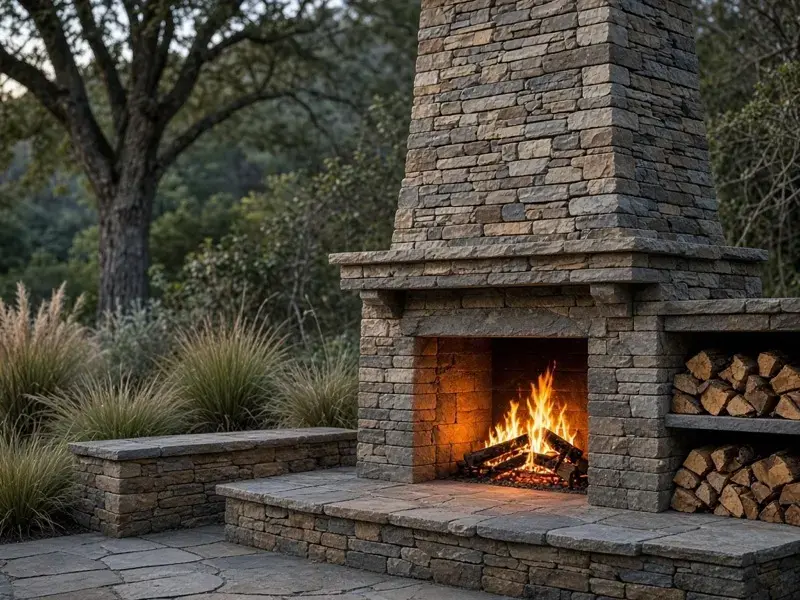
Gas is the practical choice in Saratoga given Spare the Air days and fire-season risk. We place burners on non-combustible bases, keep clearance from branches and structures, and build a seating area that fits the slope, with a level pad and a stable edge so nobody is sitting on a tilt.
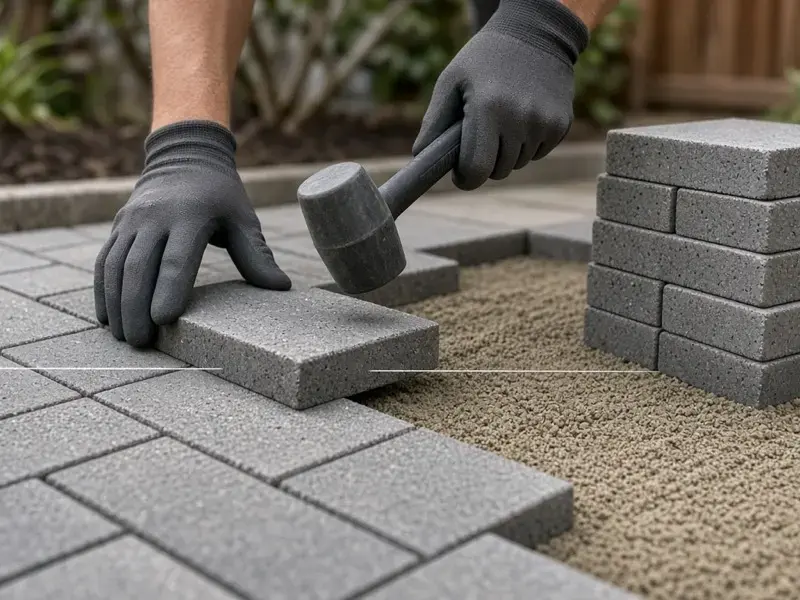
Pavers handle the small movements of foothill soils well when the base is right. We build terraced pads with proper edge restraint, route drainage around walls, add geotextile under the base where soil is soft, and use non-combustible surfaces next to the house.
Questions
Often, once a wall passes a certain height or holds up a driveway, structure or slope with a surcharge. The exact trigger depends on the city rules, so check with city staff. We can help sort out what drawings they may ask for.
Often yes, but setbacks and permits can apply near a bank. We ask early what the city or water agencies expect, and plan the work so it stays out of the protected zone where possible.
Probably. Many foothill-edge cities protect certain native trees by size or species. Check with city staff before removing or trenching near one. We can adjust the layout to protect roots.
Soil is often shallow, so excavation can hit rock sooner than expected. That affects wall footings, drainage and driveway bases. We probe the site before pricing the work so we aren't guessing.
If your Saratoga yard has a slope, a wall that's leaning or a patio idea that keeps running into the hillside, San Jose Hardscapes can come out, read the ground and tell you what's realistic. We'll talk permits, access and drainage before anyone picks up a shovel.